Rome Beyond the Landmarks: The Elegant Guide to Living the Italian Dolce Vita
A considered guide to the Rome that lives beyond the guidebook — the quiet streets, the historic cafés, the hidden courtyards and the small daily rituals of a city best experienced slowly.
By Isabella Conti · July 29, 2026 · 13 min read
Rome is not a city to be visited. It is a city to be lived. This is the quiet realisation every returning traveller comes to, usually somewhere between a second espresso in a marble-countered bar in Campo Marzio and a slow walk through the Aventine at dusk. The great monuments — the Colosseum, the Pantheon, the Vatican — are photographed, ticked off, and eventually forgotten. What remains, what marks a traveller, is the smaller Rome: the light on a stucco wall at seven in the evening, the sound of a fountain in an empty piazza, the way a Roman waiter refuses to hurry you through a plate of cacio e pepe.
The best travellers here understand something the guidebooks do not print. Rome does not reward efficiency. It rewards attention. A morning spent in one neighbourhood, walking slowly, sitting for a long coffee, watching the city rearrange itself around you, is worth three museums seen at pace. The Italians have a word for this, though they rarely bother saying it: dolce far niente — the sweetness of doing nothing. It is not laziness. It is a discipline.
What follows is not an itinerary. It is a guide to the Rome that lives beneath the postcard — the streets worth wandering, the cafés worth sitting in for hours, the courtyards most visitors never see, the hotels with real character and the small, essential rituals that turn a week in the city into something closer to a way of thinking about life.
The Most Beautiful Streets to Wander
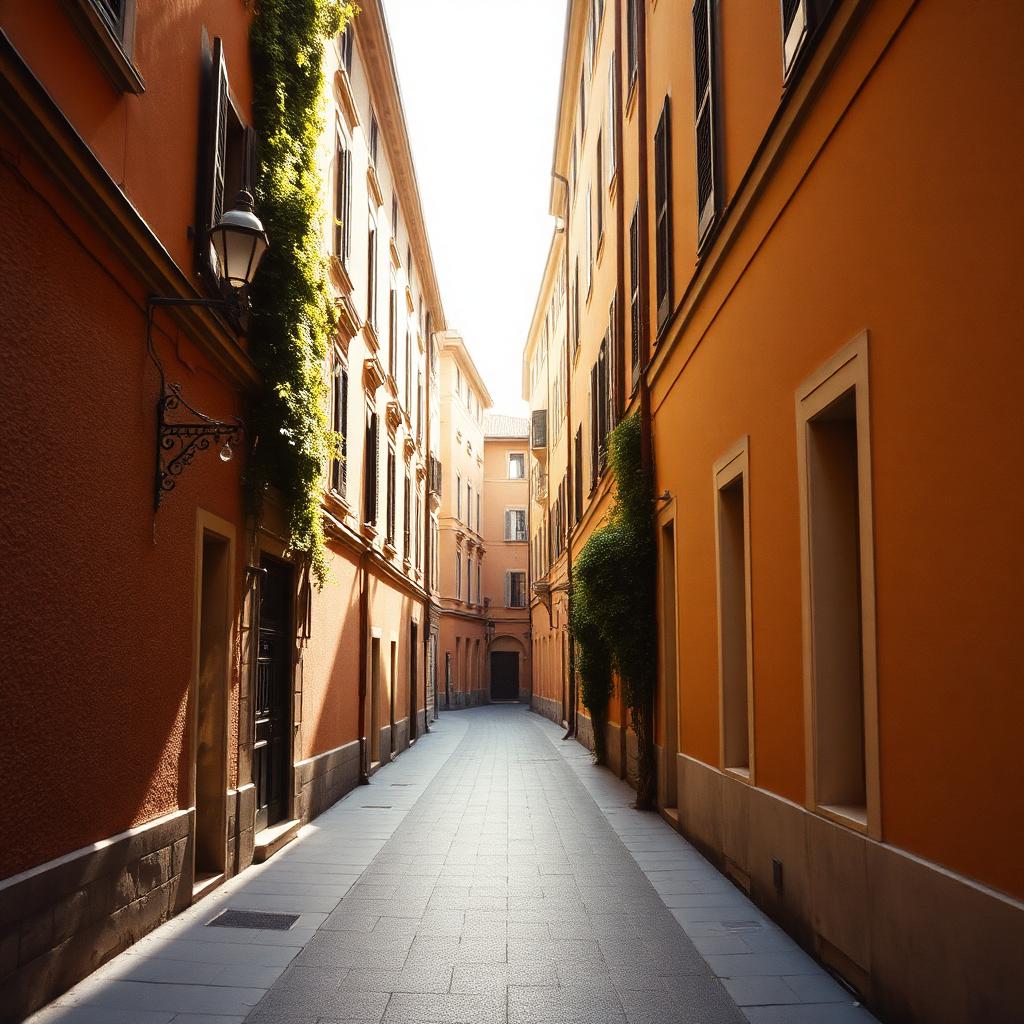
Rome is a city best read on foot. The great pleasure is not arriving anywhere in particular; it is walking a street slowly enough to notice the colour of a facade, the wrought-iron balcony, the small marble plaque that tells you Keats once slept here. A few streets, in particular, reward the slower walker.
Via Giulia is the city's most elegant address — a straight, quiet Renaissance street laid out by Bramante in the sixteenth century, lined with palazzos in Roman honey and ochre, ivy spilling from stone balconies, antique galleries and bookbinders behind heavy wooden doors. Walk it early, before the sun is high. Stop at the small ivy-covered arch — the Arco Farnese, designed by Michelangelo — and look up.
Via dei Coronari, between Piazza Navona and the Tiber, is Rome's antiques street, narrow enough that two Vespas cannot quite pass. The palazzos are lower and older here, the shopfronts unchanged in a century. It is a street for the late afternoon, when the light turns amber and the antique dealers step out for a cigarette.
Via Margutta is the address of artists — a cobbled lane behind Piazza del Popolo that Fellini called home for decades. Ateliers, small galleries, wisteria and one perfect trattoria (Il Margutta, vegetarian, still worth booking). Walk it in the morning; the light between the buildings is unreasonably beautiful.
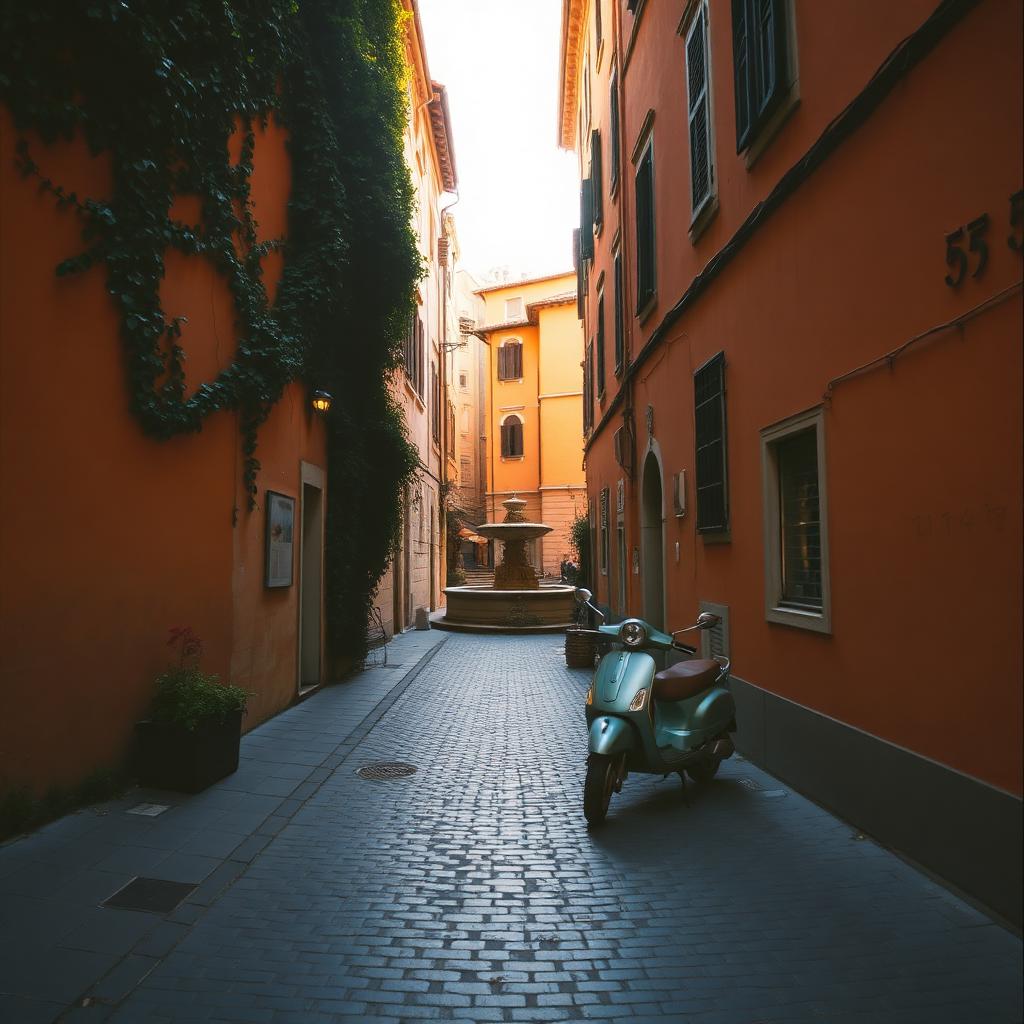
And, finally, the maze of Trastevere. Cross the river at Ponte Sisto in the evening and get lost — deliberately — in the alleyways behind Piazza Santa Maria. This is the Rome that photographs never quite capture: warm terracotta walls, laundry above your head, a small bar with three tables where the owner still keeps the coffee at exactly the temperature his father kept it.
Elegant Cafés Worth Sitting For Hours
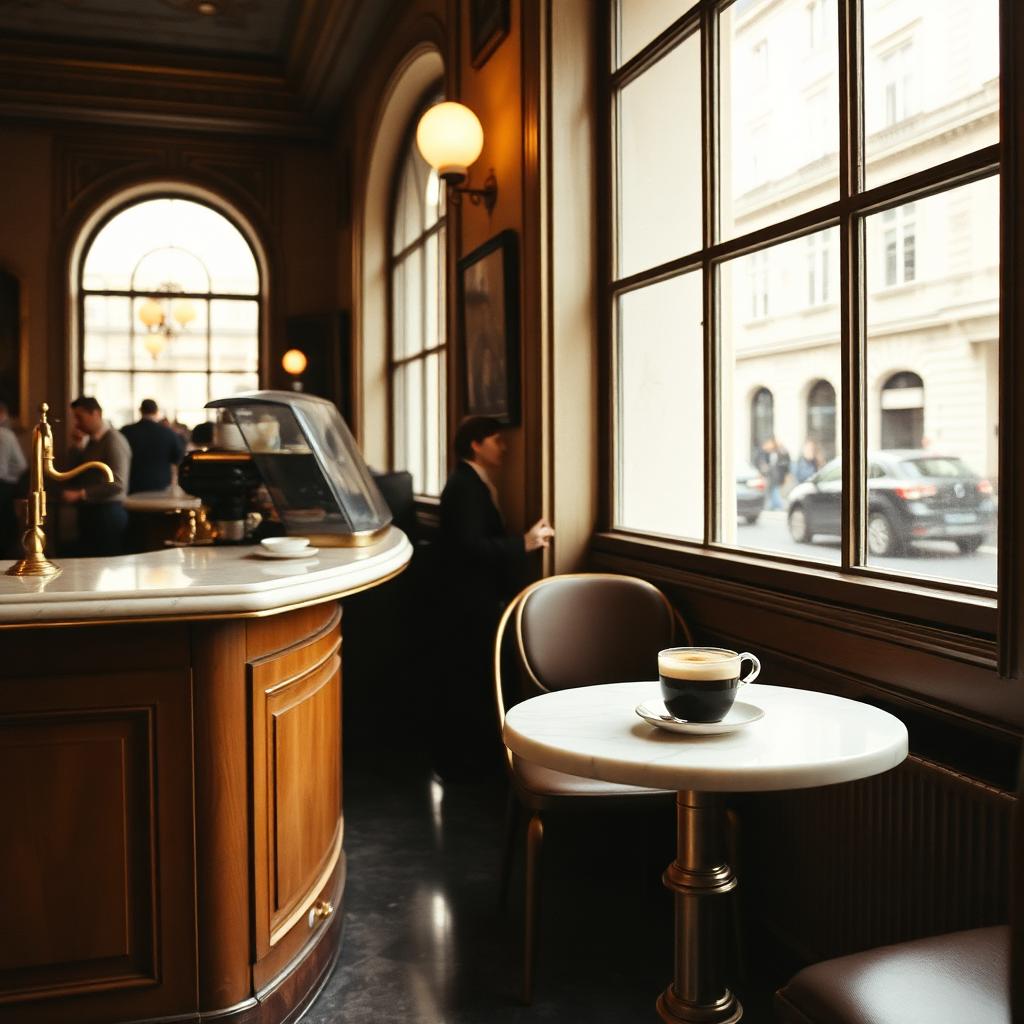
The Roman café is not a coffee shop. It is an institution. You do not sit with a laptop; you sit with a newspaper, or with a friend, or with nothing at all. The coffee is served in porcelain, the water in glass, the pastry on a small silver plate. The rhythm is slow, and the waiters, no matter how busy, will never ask if you are ready to leave.
Antico Caffè Greco, on Via Condotti, has been open since 1760. Its red velvet banquettes and gilt-framed portraits have hosted Byron, Goethe, Casanova, Wagner. Order an espresso at the marble bar (a fraction of the seated price) and stay for an hour in the second room, which is quieter and older and unreasonably beautiful. This is the Rome that has not changed and will not.
Sant'Eustachio Il Caffè, tucked behind the Pantheon, is where Romans go for the city's most talked-about espresso — brewed on a wood-fired machine that has not been switched off in decades. Ask for it senza zucchero (unsweetened, as the baristas otherwise sweeten it by default) and drink it standing at the bar, like a Roman.
Caffè Canova-Tadolini, on Via del Babuino, is a former sculptor's studio still filled with plaster busts and half-finished marbles. Sit at a small round table amid the statues and order a cappuccino at eleven in the morning; you will not wish to be anywhere else.
Bar del Fico, on the piazza of the same name, is the city's favourite unhurried breakfast address — outside, under a chessboard-playing crowd of regulars, with a cornetto and a caffè shakerato in July. Come back at seven for an aperitivo.
Hidden Courtyards Most Visitors Miss
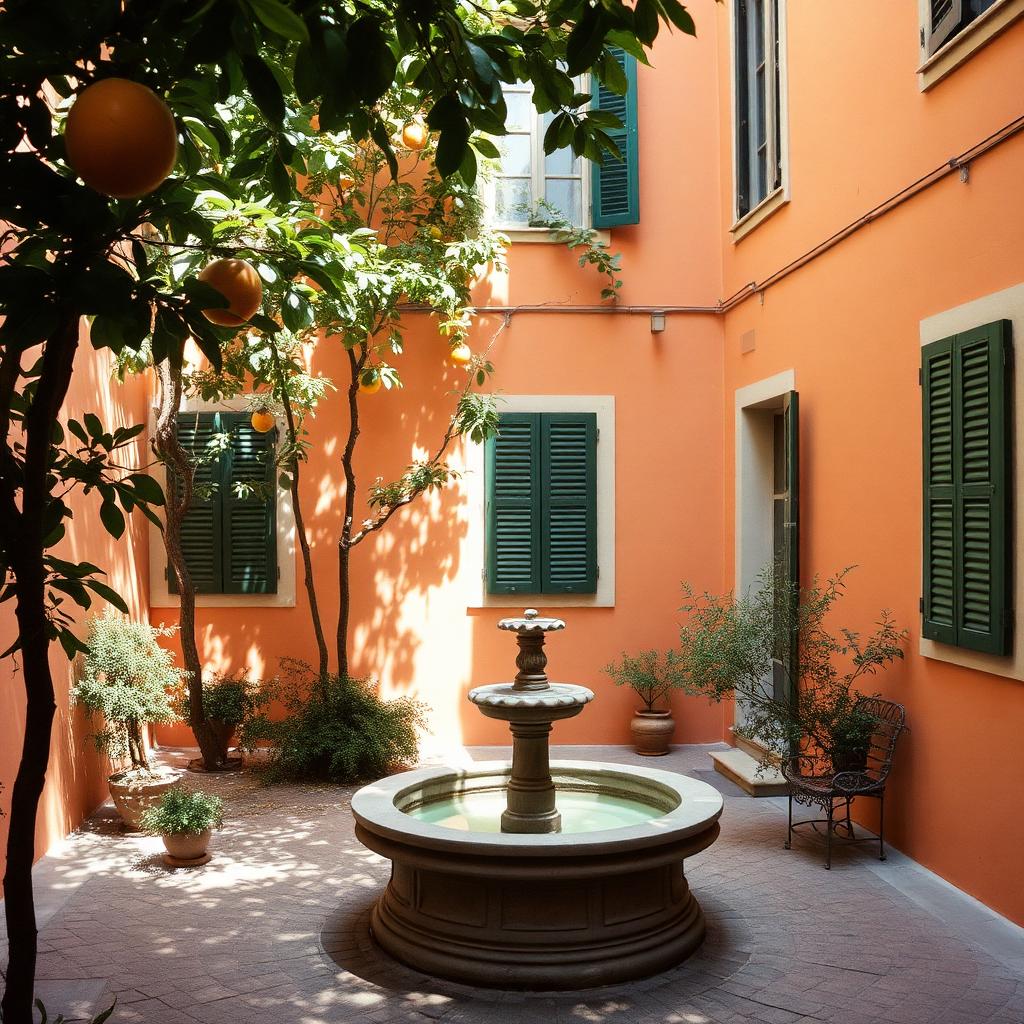
Rome hides its most beautiful spaces behind heavy wooden doors. Push one open — most are open in the daytime — and you will find an entirely different city: a private courtyard with a stone fountain, an orange tree, ochre walls with painted shutters. These are the small, unlisted wonders of the historic centre, and knowing where to look for them is one of the pleasures of returning to Rome.
The courtyard of Palazzo Spada, in Piazza Capo di Ferro, contains Borromini's famous forced-perspective gallery — an eight-metre corridor made to appear four times longer, with a small statue at the end that looks life-sized until you walk toward it. Enter with the museum ticket; ask the guard to point you to the perspective.
The chiostro of Santa Maria della Pace, designed by Bramante, is Rome's most perfect Renaissance courtyard — small, restrained, arcaded on two levels, entered through a modest door on a quiet street behind Piazza Navona. Almost no one is ever inside. Come early. Sit on the stone bench and stay.
The orangerie of the Palazzo Farnese, glimpsed through the gate on Via Giulia; the courtyard of Palazzo Altemps, with its collection of Roman sculpture in a Renaissance loggia; the cloister of San Giovanni in Laterano, a twelfth-century garden of twisted mosaic columns. Each is a lesson in how Rome was designed to be lived — not around monuments, but around small, private, beautifully proportioned rooms.
The Best Time of Day for Every Neighbourhood
Rome is not one city but many, and each neighbourhood has an hour at which it is most itself. Getting the timing right is the difference between the city you photograph and the city you understand.
- The Aventine, at sunset — the quiet hill above the Circus Maximus, with the famous Orange Garden (Giardino degli Aranci) and the keyhole of the Knights of Malta framing St Peter's dome in the distance. Come an hour before dusk. Bring nothing.
- Trastevere, after nine — the neighbourhood is at its most beautiful when the day-trippers have gone. Walk the alleyways behind Piazza Santa Maria and stop for a nightcap at one of the small bars around Piazza de' Renzi.
- Campo de' Fiori, at seven in the morning — the flower and produce market is at its liveliest and its most photogenic before eight. By ten, the tourists arrive; by noon, the magic is gone.
- The Pantheon, at eight in the evening — the queues are gone, the piazza empties, and the great porch is lit from below. Sit on the fountain steps opposite and look at what is, arguably, the most extraordinary building in Europe.
- Monti, at aperitivo hour — Rome's most fashionable small neighbourhood, tucked between the Colosseum and Termini. Come at seven, walk the vintage shops on Via del Boschetto, and take a glass of Franciacorta at a table on the piazza.
Boutique Hotels with Timeless Character
Rome has grand hotels — the Hassler, the de Russie, the Eden — and they are worth every euro of their considerable rates. But the city's smaller hotels are, in many ways, more Roman: converted palazzos, family-run pensioni, ten-room townhouses tucked into the historic centre. These are the addresses that turn a trip into a memory.
- Hotel de Russie — the great Roman classic, between Piazza del Popolo and the Spanish Steps, with the most beautiful garden in the city and a bar (the Stravinskij) that is a destination in itself.
- Hotel Vilòn — an eighteen-room townhouse hidden inside the Palazzo Borghese, entered through a discreet door on a quiet street. Interiors by Roman designer Giampiero Panepinto. Impeccable, personal, quietly one of the city's finest new hotels.
- Palazzo Dama — a former aristocratic residence turned hotel near Piazza del Popolo, with the historic centre's only outdoor swimming pool and a garden restaurant that Romans book for their own birthdays.
- Hotel Locarno — a small, wood-panelled art-nouveau hotel near the Piazza del Popolo, unchanged since 1925, with a rooftop for evening drinks and a lobby that feels like the set of a Bertolucci film.
- G-Rough, off Piazza Navona — a design-led ten-room hotel in a seventeenth-century palazzo, with mid-century Italian furniture and one of the best restaurants (Rimessa Roscioli) at street level.
Where Romans Actually Go for Aperitivo
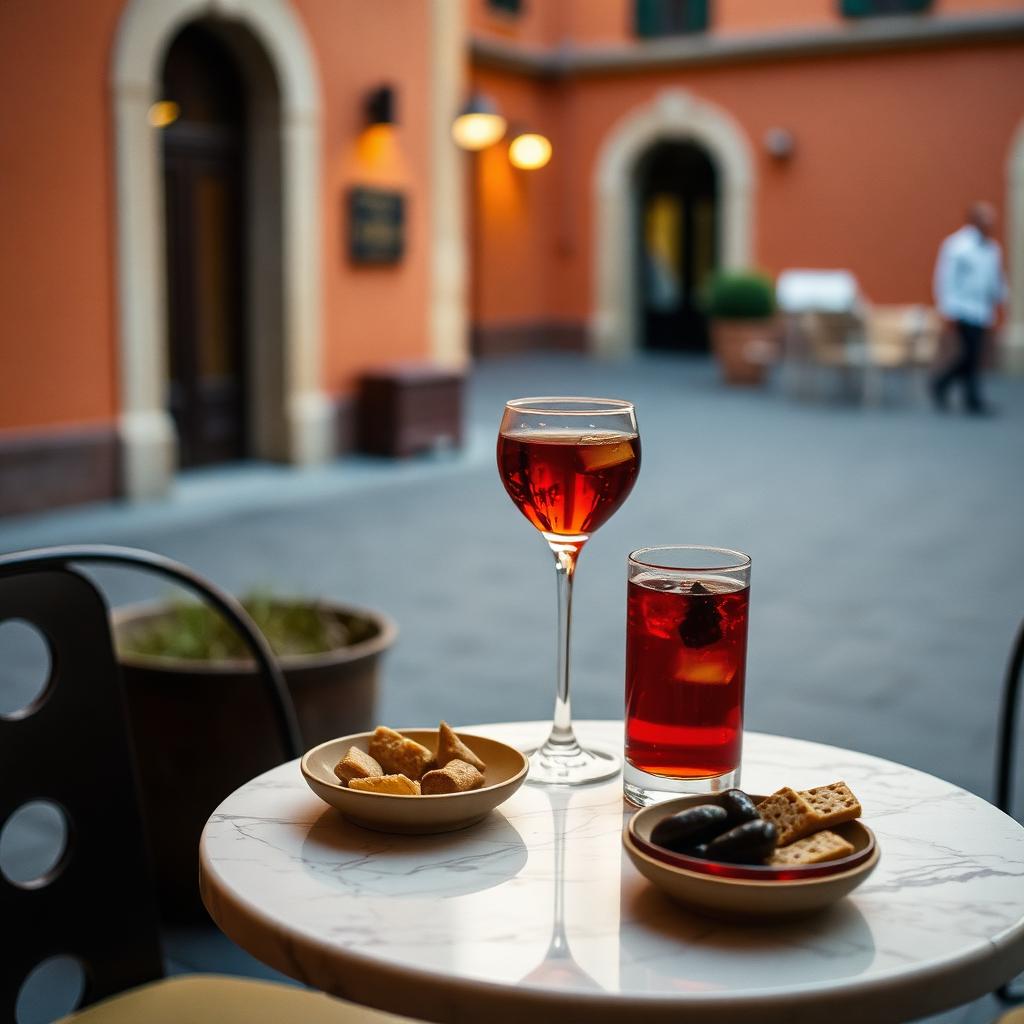
The aperitivo is the great Italian civic ritual — a slow drink between the end of the working day and the beginning of dinner, taken standing at a bar or sitting outside on a piazza, always accompanied by something to eat, never rushed. In Rome, unlike Milan, the aperitivo is quieter and more residential. The trick is to avoid the tourist-facing addresses and go where Romans actually go.
Freni e Frizioni, in Trastevere, is the classic — a former mechanic's workshop with a long marble counter, a generous buffet of Roman antipasti included with the drink, and a crowd that spills onto the piazza until midnight. Come at seven-thirty. Order a negroni sbagliato.
Il Marchese, on Via di Ripetta, is the city's most serious cocktail address — a wood-panelled bar specialising in amaro, Italy's herbal digestivo, with a hundred and fifty bottles behind the counter and a bartender who will happily guide you through them.
Salotto 42, on Piazza di Pietra, faces the Temple of Hadrian across a small, unusually beautiful piazza. Book a table outside at dusk; the view is one of the city's most quietly extraordinary.
Ai Tre Scalini, in Monti, is a wine bar for the neighbourhood's regulars — a small, warm room with a chalkboard of Roman labels and a cured-meat board that could be a dinner in itself.
And, for the great classic, Stravinskij Bar at Hotel de Russie — the drink is expensive, the garden is unmatched, and the negroni is the best in Rome. Book a table under the wisteria for eight.
Beautiful Bookstores and Design Shops
Rome is not, in the way of Milan, a shopping city. It is a browsing city — a place where the pleasure is in finding a small, specific shop tucked into a quiet street, run by a family for four generations, selling something you did not know you wanted.
Libreria Altroquando, on Via del Governo Vecchio, is Rome's most beautiful independent bookshop — art books, monographs, small-press Italian design, a wooden ladder and a cat. Come with time.
Bibli, in Trastevere, is a small bookshop with an attached café-garden — a Roman institution for readers who like their books with a glass of white wine.
Chez Dede, near Piazza Navona, is the address for the design-inclined — a beautifully edited concept store of homewares, textiles, illustrated books and small pieces of design, curated by graphic designer Andrea Ferolla. The scented candles alone are worth the visit.
Fabriano, on Via del Babuino, has been selling handmade Italian paper since 1782 — leather-bound notebooks, wax seals, pen sets, the kind of stationery that makes you want to write letters.
For clothing, Gente on Via del Babuino for a considered edit of Italian designers; Nuyorica for shoes; SBU for beautifully made Italian denim in a Renaissance palazzo off Via di Torre Argentina.
Rooftops Worth the View
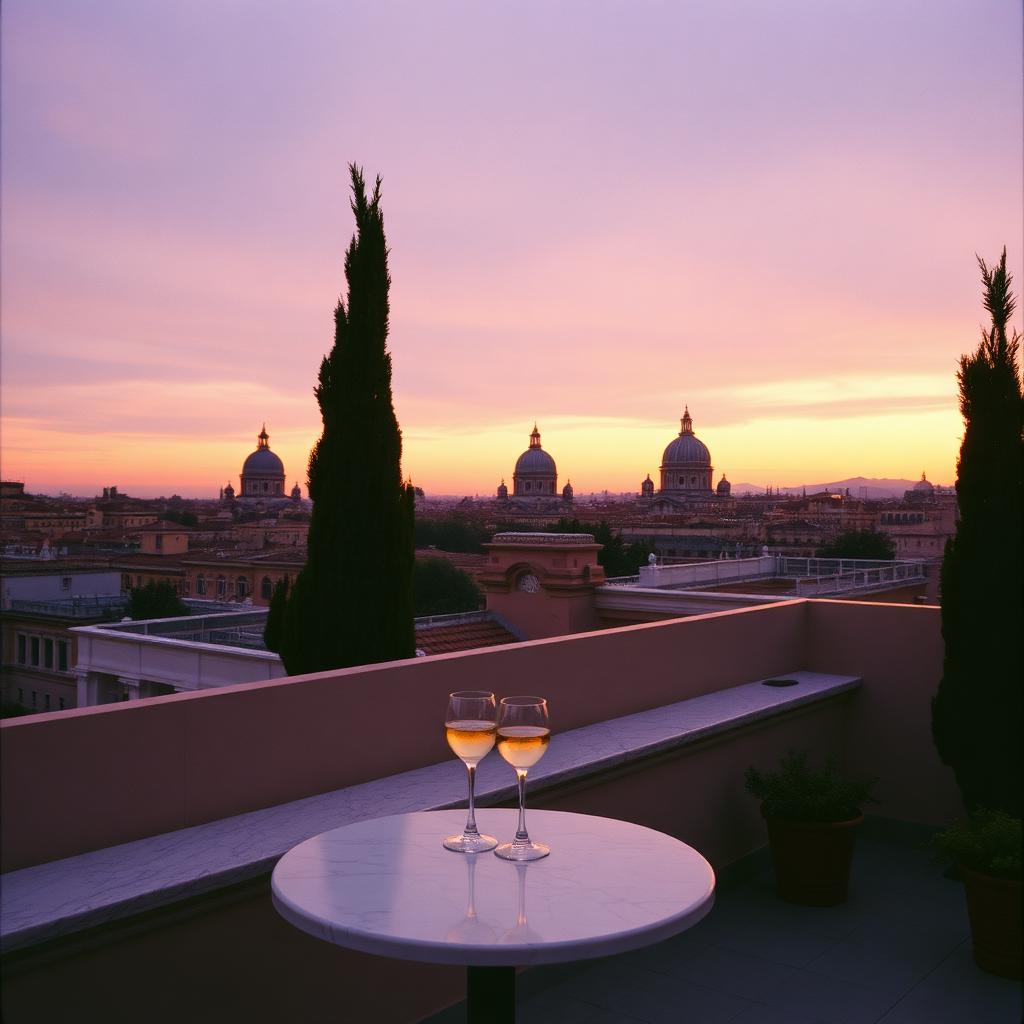
Rome is a low city — no building rises above the dome of St Peter's — and the rooftop, accordingly, is one of its great pleasures. The best of them look out across the terracotta rooftops of the historic centre toward the domes and cupolas of the great churches, framed by cypresses and umbrella pines.
Terrazza Borromini, on the rooftop of the Palazzo Pamphilj, gives you Piazza Navona from directly above — a view usually reserved for the diplomats of the Brazilian Embassy, which occupies the palazzo. The bar is small, the drink is worth the price, and the sunset over the piazza is unforgettable.
Hotel Raphael's rooftop, tucked into a quiet corner of the centro storico, is the address the design-inclined choose over the more famous ones — an ivy-covered terrace with the domes of the historic centre laid out below. Book a table for aperitivo.
La Grande Bellezza at Hotel Eden, the rooftop restaurant made famous by Sorrentino's film, is Rome at its most operatic — the Villa Medici, the Villa Borghese and St Peter's all visible from the same table.
For a less-obvious option, walk up to the Aventine at dusk, sit on the wall of the Giardino degli Aranci with a bottle of prosecco from the corner shop, and watch the city turn pink. This is a rooftop of a different kind, and Rome has no better.
Restaurants That Feel Authentically Roman
Roman cooking is not a subtle cuisine. It is the food of shepherds and butchers — pasta with pecorino and pepper (cacio e pepe), pasta with guanciale and egg (carbonara), pasta with tomato and cured pork cheek (amatriciana), and the great Roman offal dishes that the more adventurous traveller should not miss. The best Roman restaurants are unpretentious, family-run, often unchanged for decades. Reservations are essential.
- Armando al Pantheon — a small trattoria a few steps from the Pantheon, family-run since 1961, serving what many Romans consider the definitive cacio e pepe. Book weeks ahead.
- Pierluigi, on Piazza dei Ricci — the city's most beautiful evening dinner address, with tables spilling into a small piazza and a menu that leans toward seafood. Order the vongole and a bottle of Frascati.
- Roscioli, in Campo de' Fiori — a wine bar, salumeria and restaurant in one, with the finest cured meats and cheeses in the city, and a carbonara that is a benchmark. Sit at the counter if you can.
- Da Enzo al 29, in Trastevere — the neighbourhood's most beloved trattoria, tiny, no bookings after the first sitting, worth the queue. Roman classics done exactly right.
- Flavio al Velavevodetto, in Testaccio — carved into an ancient hillside of broken amphorae, serving the city's best amatriciana in a room that could not be more Roman.
- La Pergola, at the Rome Cavalieri — Rome's only three-Michelin-star restaurant, with a view of the whole city, for the traveller who wants one great evening.
What to Wear in Rome During Summer
Rome dresses well. This is not a city where the traveller in athletic sandals and a technical daypack passes unnoticed. The Romans themselves lean into the heat with lightness and restraint — linen, cotton, natural fibres in ivory, sand, olive and terracotta; leather sandals; a straw bag; a lightweight scarf for the churches, whose sleeveless dress code is stricter than most visitors realise.
Think of the wardrobe as an editorial photograph. A long linen dress in cream. A pair of tailored linen trousers with a fitted white shirt, sleeves rolled. A wide-brimmed straw hat. Flat leather sandals or espadrilles for the cobblestones (heels are punished, quickly). A small structured shoulder bag, not a backpack.
For a fuller edit of the pieces that translate best to Rome in July, read our guide to a Quiet Luxury Vacation Style — the tonal palette, the fabrics and the specific pieces that travel most elegantly through the Italian summer.
A One-Day Elegant Walking Itinerary
If you have only one day in Rome, spend it slowly. This is our editor's one-day itinerary — the walk we do every time we return, tested over many summers, engineered around the light and the mealtimes rather than the monuments.
8:00 — Piazza del Popolo. Start at the great oval piazza, before the crowds. Have a cappuccino at Rosati, sitting outside; take the twin churches, the obelisk, the sweep of the Corso.
8:45 — Via Margutta and Via del Babuino. Walk south through the quiet artist quarter. Stop at Fabriano for a notebook, at Chez Dede for a candle, at Bomba (Via dell'Oca) for a coffee at the counter.
10:00 — The Spanish Steps and Via Condotti. Climb the Steps to the church of Trinità dei Monti; look back at the view. Descend and walk Via Condotti past the great Roman houses — Bulgari, Valentino, Fendi — to the marble bar of Antico Caffè Greco. A second espresso is not excessive.
11:15 — Palazzo Colonna, or, if it is Sunday, a slow walk through the Aventine. Rome's great secret gallery, open only on Saturday mornings. Otherwise, cross the river and climb the Aventine for the Orange Garden.
13:30 — Lunch at Armando al Pantheon. Book weeks ahead. Order the cacio e pepe, a plate of puntarelle, a half-litre of white. Take your time; the Romans do.
15:00 — The Pantheon and Sant'Ignazio. Walk the two great churches quietly, one after the other. Sit under the oculus for ten minutes. Say nothing.
16:00 — Piazza Navona, Via dei Coronari, Ponte Sant'Angelo. A slow afternoon walk through the historic centre's most photogenic streets, ending at the Tiber. Cross the bridge; look back.
18:30 — Aperitivo at Salotto 42, Piazza di Pietra. Sit outside. Watch the Temple of Hadrian catch the last light. Order a negroni.
20:30 — Dinner at Pierluigi. Tables outside on Piazza dei Ricci; order the spaghetti alle vongole and a bottle of Vermentino. Do not rush.
23:00 — A walk past the Pantheon, illuminated, empty. Rome, at this hour, is at its most extraordinary. Go home slowly. Come back tomorrow.
Experiences Worth Booking
Rome asks for very little planning, but a few things are worth reserving before you arrive — not for efficiency, but because the alternative is an hour in a queue that could have been an hour on a piazza. A skip-the-line visit to the Colosseum and the Roman Forum is the obvious one: go first thing, before the heat, and let the crowds arrive behind you. The Vatican Museums and the Sistine Chapel are the other — book the earliest entry available and walk the galleries while they are still quiet enough to hear your own footsteps.
Beyond the great monuments, the city rewards a guide with a good eye. A small-group walk through the historic centre — Piazza Navona, the Pantheon, the Trevi Fountain, the streets in between — is the most elegant way to orient yourself on a first evening. For a different Rome entirely, descend into the catacombs and the underground city, where the layers beneath the pavement explain more about the place than any museum.
And when a week begins to feel like enough of the city, take a day trip out to Pompeii, Tivoli or the Castelli Romani — a train, a long lunch, and a return to Rome in the evening light. As always: choose the smallest group available, and book early in high season.
The Romans have a phrase for the moment a traveller falls in love with the city: ti sei innamorato di Roma. It is not, they will tell you, about the Colosseum or the Vatican. It is about the smaller things — the cappuccino at the marble bar, the walk home along the Tiber, the way the light catches a fountain in an empty piazza at dusk.
The trick, in the end, is not to see more of Rome. It is to see less of it, slowly. Book fewer things than you think you should. Return to the same café for coffee every morning. Wander streets whose names you never learn. Sit on a piazza for an hour with nothing to do. This, and not the itinerary, is the great gift of a week in Rome.
Continue reading: The Amalfi Coast Travel Edit — The Most Beautiful Places to Visit and The Most Beautiful Streets in Paris for Fashion Lovers.