Quiet Luxury Vacation Style: The Fashion Formula That Always Looks Expensive
The unwritten rules behind the wardrobe that photographs beautifully and never announces itself — how European women dress in summer, and why it always reads as expensive.
By Sophie Lindqvist · June 30, 2026 · 12 min read
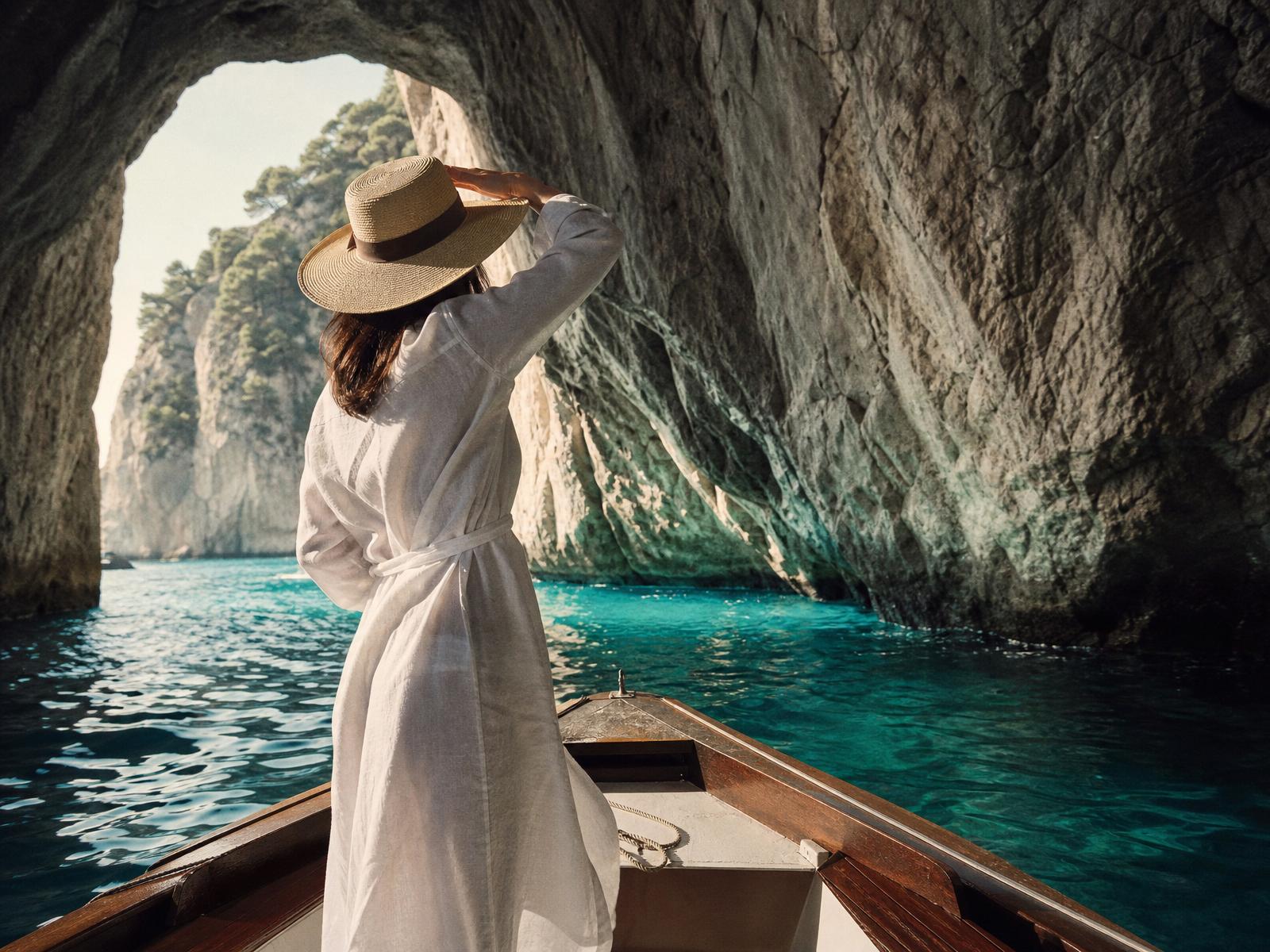
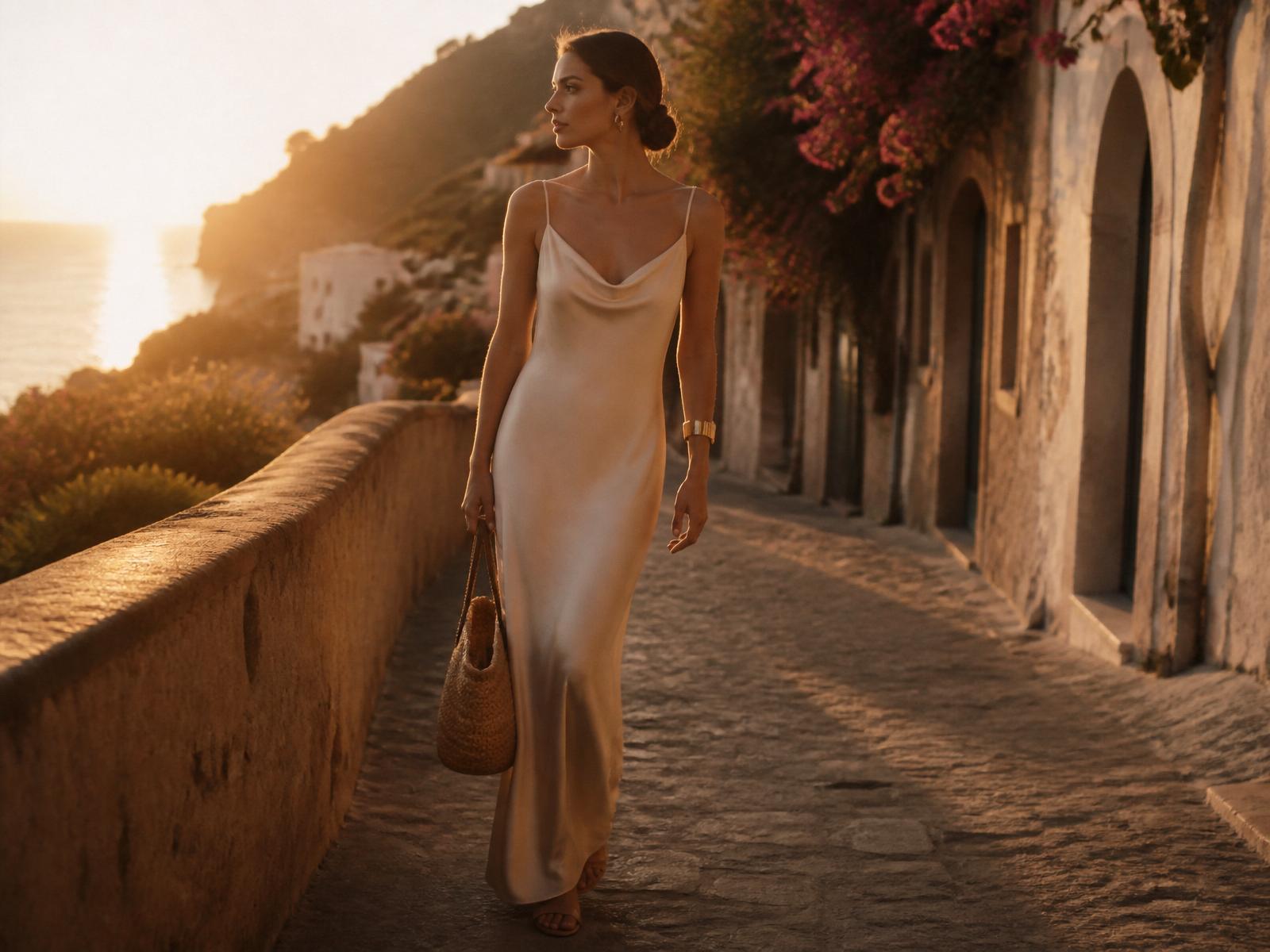
Quiet luxury is one of those phrases that entered the vocabulary too quickly and risks losing its meaning. On the coast in summer, though, its meaning is unmistakable. It is the woman in the linen dress with no visible label, the tan leather sandals worn soft, the gold chain that has never been taken off. It is what remains when everything showy has been removed.
The formula is not about spending more. It is about spending differently — on fabric rather than logo, on tailoring rather than trend, on one exceptional piece rather than four merely adequate ones. Done well, it produces the wardrobe that always looks expensive, in any city, in any decade.
This is our editors' complete guide to quiet luxury vacation style: what it actually means, how European women practise it in summer, and how to build a wardrobe that reads as considered rather than costly.
What quiet luxury actually means
Quiet luxury is the deliberate absence of visible signalling. No logos, no monograms, no seasonal 'It' bag, no trend that will date the photograph within a year. In their place: exceptional fabric, precise tailoring, a narrow palette, and pieces that improve rather than expire.
It is the old-money aesthetic, updated. Where the visible luxury of the 1980s spoke through gold hardware and printed silk, its quieter descendant speaks through weight of cashmere, the drape of a linen dress, the patina on a leather bag that has been carried for a decade.
The philosophy is older than the phrase. Coco Chanel articulated it in the 1920s: 'Luxury must be comfortable, otherwise it is not luxury.' Cristóbal Balenciaga sharpened it in the 1950s. Phoebe Philo revived it at Céline in the 2010s. What links them is a refusal of anything that requires an explanation.
The elegance of a woman is what remains when the label has been cut out.
How European women dress during summer
Spend an afternoon watching women walk through the Marais in July or along the Corso in Milan, and a very consistent aesthetic emerges. The palette is narrow. The fabrics are natural. The silhouettes are loose but never sloppy. Almost nothing is new.
A French woman in her forties will wear the same linen dress she bought in 2019, with a leather belt she has owned since her thirties, and a pair of sandals so soft they mould to her feet. An Italian woman will pair a slightly oversized cotton shirt with tailored linen trousers, gold hoops, and a small leather bag that costs more than the rest of the outfit combined. A Swede in Stockholm's archipelago will wear a bone-white cotton dress with rope-soled espadrilles and no other embellishment at all.
None of them are trying. That is the point.
Choosing fabrics over logos
The single most important shift in building a quietly luxurious wardrobe is a rerouting of budget: away from visible branding, toward fabric quality. A linen dress from a small European maker in the right weight of flax will look — and feel — more expensive than a logo-heavy piece three times the price.
Learn the vocabulary. In linen, look for weights above 180 gsm and a fibre grown in Normandy or Belgium. In cotton, look for Egyptian, Sea Island, or Japanese milled fabric. In silk, mid-weight silk crêpe drapes better than lightweight satin. In leather, full-grain vegetable-tanned Italian or Spanish leather ages into something more beautiful over time; corrected-grain leather cracks and dulls.
A single garment in exceptional fabric will outperform a dozen in mediocre ones. It is why the linen dress in the fifteen-piece capsule earns its place over and over.
The importance of tailoring
Tailoring is the quietest luxury of all. A three-figure dress that has been altered to sit correctly on the shoulders will read as more expensive than a four-figure dress that has not.
For summer pieces, the alterations that matter most are the ones nobody sees. The length of a linen trouser hemmed so it grazes the top of the sandal. The shoulder of a cotton shirt taken in half a centimetre. The waist of a slip dress adjusted so the fabric falls straight. These are twenty-minute changes at a good local tailor and they transform ready-to-wear into something that looks made-to-measure.
Find a tailor whose work you trust and bring every new piece to them before the season begins. It is the single most reliable way to buy less and wear it better.
Neutral colour palettes
A quietly luxurious summer wardrobe operates within a very narrow range of colours. This is not a limitation but a discipline: when every piece is tonal, everything works together, and the effect is one of intention.
Build from the neutrals of the landscape itself — ivory, cream, sand, oatmeal, wheat, taupe, camel, chocolate, olive, deep navy, black. Add colour sparingly, and only in fabrics that carry it well: a coral silk scarf, a terracotta ceramic earring, a rust-red leather belt.
Avoid two things above all: fluorescent brights (which read as cheap regardless of the price paid) and cold-toned pastels (which have never been in fashion in Europe and are unlikely to start now).
- Foundation: ivory, cream, off-white
- Warm neutrals: sand, oatmeal, wheat, camel
- Anchors: chocolate, espresso, deep navy
- Alternatives to black: olive, moss, forest green
- Accents (used sparingly): terracotta, coral, ochre
How accessories elevate a look
In a quiet-luxury wardrobe, the accessories carry a disproportionate weight — and they are almost always kept small, understated and beautifully made.
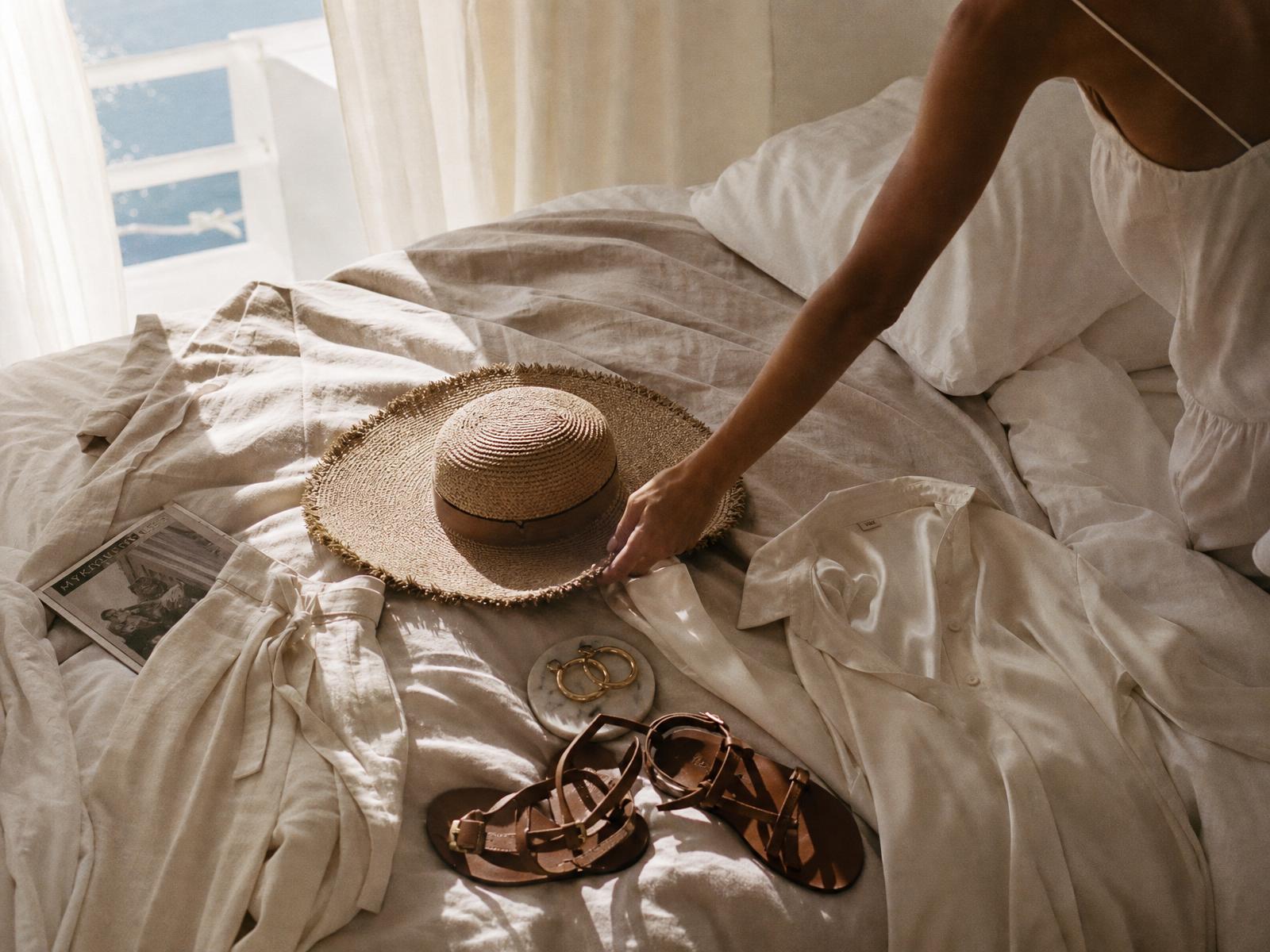
The formula: one exceptional handbag rather than three seasonal ones. One pair of oversized acetate sunglasses in a classic shape. One wide-brimmed straw hat. A slim leather belt in the same tone as the shoes. A single gold chain, worn until it becomes part of you. A pair of small hoops. One signet ring. Nothing else.
The accessories should never announce the outfit. They should complete it and then recede.
Beauty and fashion working together
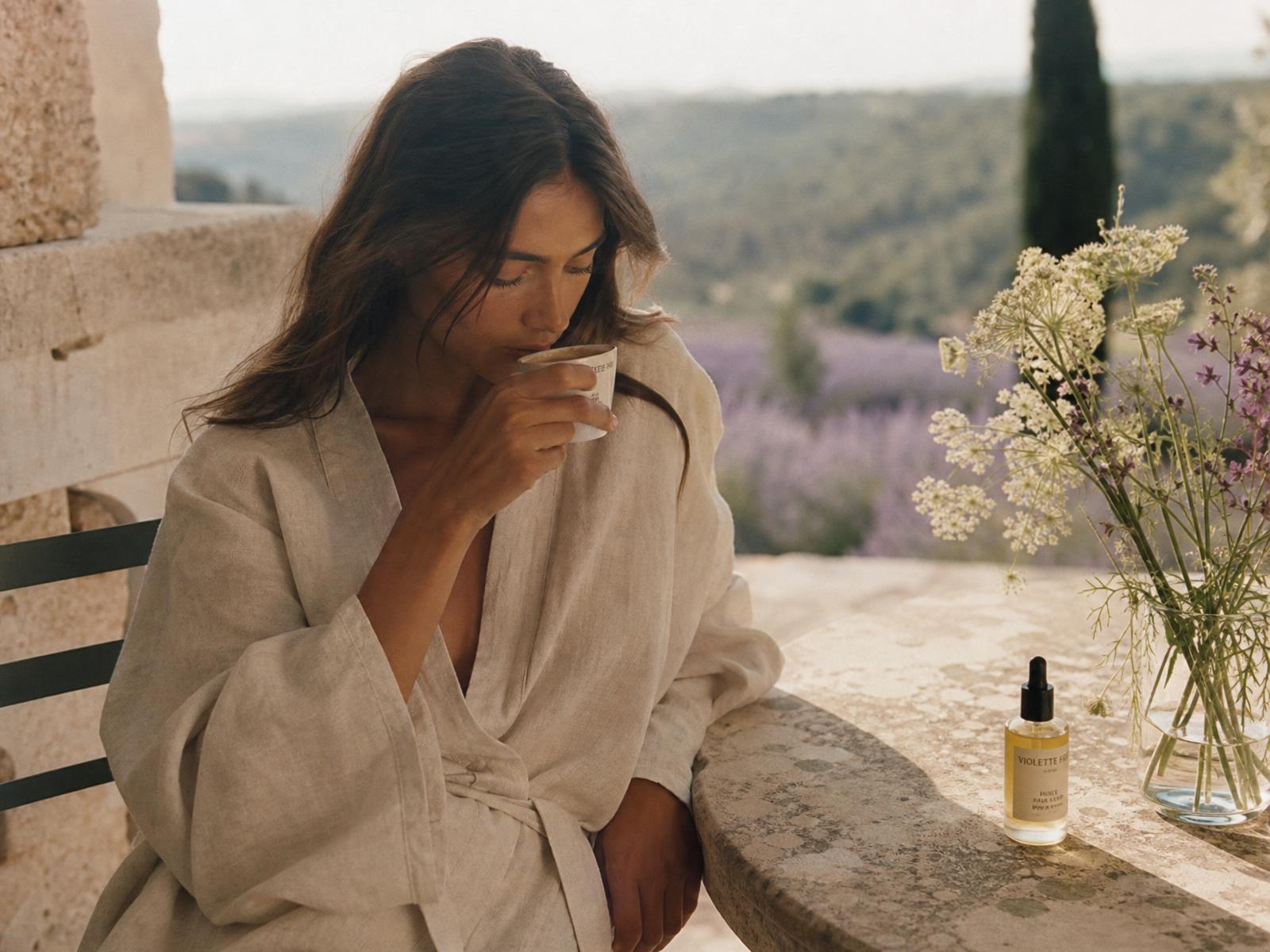
The quietly luxurious wardrobe requires a correspondingly quiet beauty aesthetic. A full glam face in a linen dress reads as a costume; a bare face with tinted SPF, a coral cream blush, brushed brows and a stain of colour on the lip reads as the woman herself.
Skin should look like skin — hydrated, protected, gently tanned. Hair should look brushed, not styled. Nails, if painted, should be a single coat of sheer beige or the same shade for a decade.
For the corresponding routine, our guide to European Summer Beauty Rituals is the definitive reference.
Creating timeless outfits instead of trendy ones
The final rule of quiet luxury is temporal. If a piece would date a photograph to a specific year, it is not part of this wardrobe.
Look at a photograph of Lee Radziwill on Capri in 1970, or Carolyn Bessette in the Hamptons in 1996, or Sofia Coppola in Positano last summer. The clothes are almost interchangeable: linen, cotton, silk, leather. Ivory, black, tan. A gold chain. A pair of sunglasses. The photographs could be from any decade because the clothes belong to none.
Build for that photograph. Ask, of every new piece, whether you will want to be seen in it in ten years. If the answer is anything other than an immediate yes, put it back.
The truest luxury is a garment that outlives its own season.
The unspoken rules
There are a handful of small conventions that separate a quietly luxurious summer wardrobe from one that is merely expensive. None of them are strict, but all of them are consistent.
- No visible logos, ever — including tonal, embossed and hardware logos
- No pieces with a shelf life shorter than five years
- One accent colour per outfit, at most
- Every leather item in one of three tones — tan, chocolate, or black
- Gold jewellery, never mixed with silver
- Hair up for dinner, down for the beach — rarely the reverse
- The bag never matches the shoes exactly — it complements them
Quiet luxury is, in the end, a form of self-possession. The woman who has nothing to prove wears the same linen dress to two dinners, the same sandals to five countries, and the same gold chain to bed. She is not, at any moment, dressed to impress. She is simply dressed.
Build the wardrobe slowly. Buy fewer things, in better fabric, from smaller makers, and wear them with the confidence of a woman who chose them carefully. Let them age with you. That, more than any specific garment or trend, is the fashion formula that always looks expensive.
Continue reading: Vacation Outfit Ideas for an Elegant European Summer and The Ultimate Mediterranean Vacation Capsule Wardrobe.
Disclosure · The selections below were independently chosen by our editors. Some links are affiliate; we may earn a small commission when you shop through them.
Curated · Tested · Recommended
Suggested to Shop
The pieces mentioned in this story, in one place — independently chosen by our editors.
- 01
Minimal Sandals
Minimal Leather Sandals
A pared-back leather sandal with a low heel or flat sole, in a natural tone — the shoe that reads as expensive in every photograph. Best broken in gently and worn from morning coffee to late dinner without a change.
- 02
Luxury Sunglasses
Classic Acetate Sunglasses
A slightly oversized acetate frame in tortoiseshell, ivory or black — the accessory that carries the entire outfit. Best in a shape that flatters your face over one that reflects the season, and worn well into the next decade.
Some links are affiliate. We may earn a commission at no cost to you.