The Amalfi Coast Travel Edit — The Most Beautiful Places to Visit
Lemon groves, pastel cliffside villages and the particular blue of the Tyrrhenian in July — a considered guide to the coast that has been drawing the well-dressed for two hundred years.
By Livia Marchetti · July 22, 2026 · 12 min read
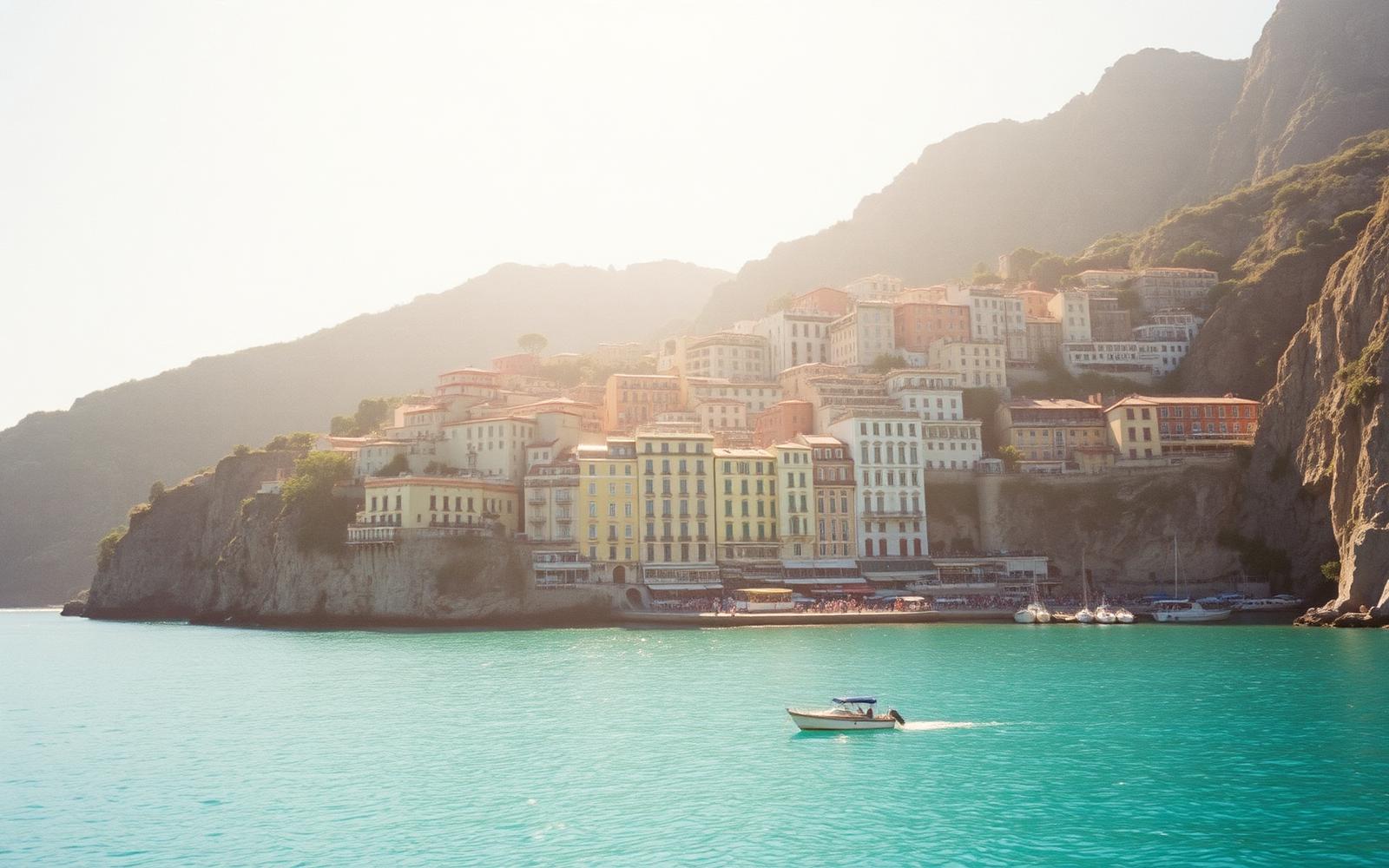
There are stretches of coastline that photograph beautifully and stretches that live beautifully. The Amalfi Coast, improbably, does both. Its cliffside villages have been painted so many times, filmed so often and photographed so exhaustively that it is easy to forget how quietly extraordinary they remain in person — the light on the sea at eleven in the morning, the smell of lemon trees on a garden wall, the way an evening negroni tastes at a table above Positano.
What follows is not a bucket list. It is an edit — the villages worth staying in, the hotels worth booking a year ahead for, the beach clubs worth the boat ride, and the small, quiet rituals that turn a week on the coast into something more like a lesson in living slowly.
The best time to visit is early June or late September — the sea is warm, the crowds are thinner, the light is softer. Book everything early. Wear linen. Leave the itinerary loose.
Positano
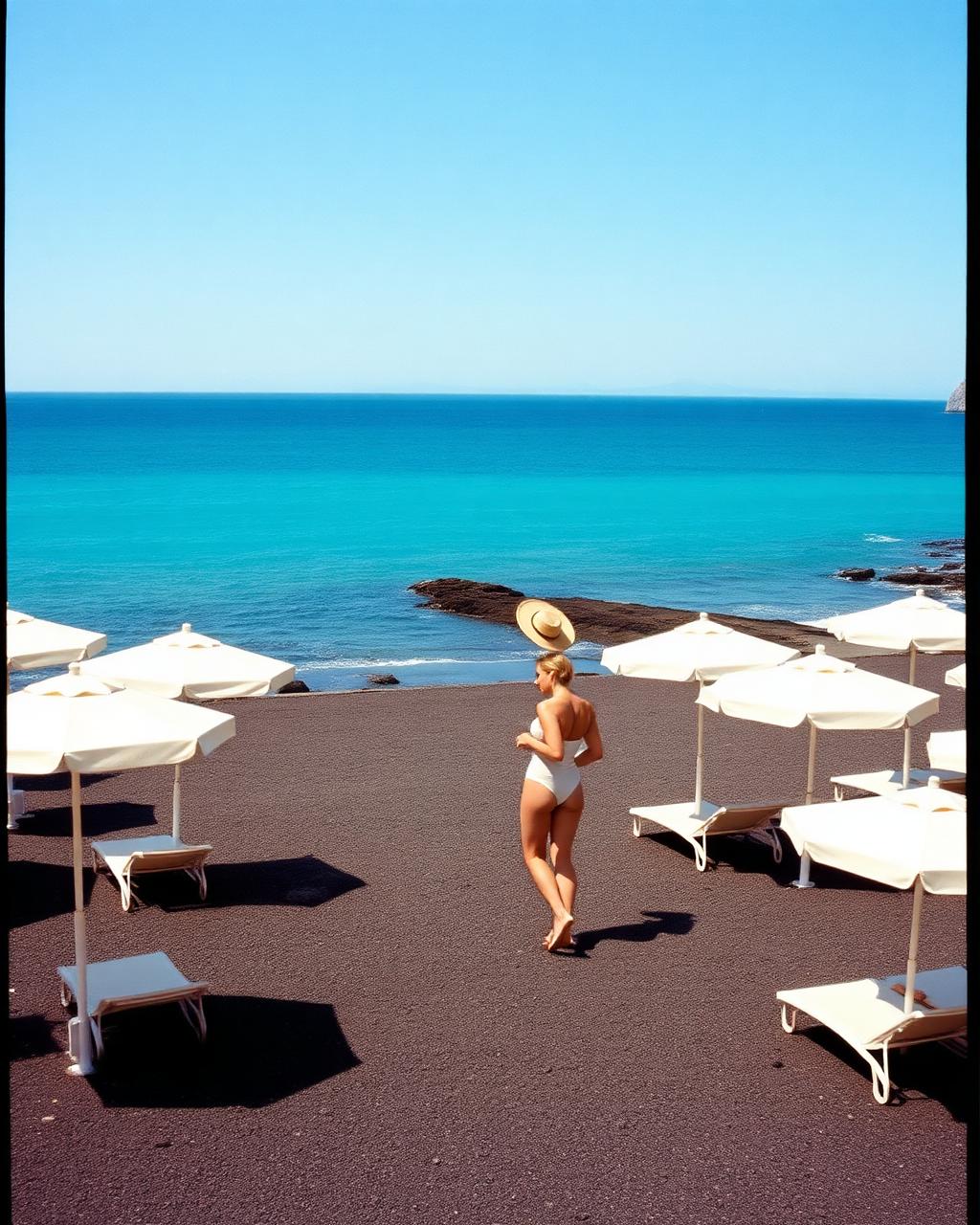
Positano is the postcard. Pastel houses cascading down the cliff to a small dark-sand beach, bougainvillea on every stone wall, boutiques selling hand-painted ceramics and floaty white cotton dresses. It is also, in high season, extremely crowded — which is why the trick is to stay in Positano and see everything else from it, so you have the town to yourself in the early morning and late evening.
Walk down to Spiaggia Grande at seven in the morning, before the sun rises over the cliff. Have a coffee at Bar Bruno. Climb back up through the Via Positanesi d'America — the pretty seafront path that connects Spiaggia Grande with Fornillo Beach. Shop the linen dresses at Antica Sartoria and the leather sandals at Emanuela Caruso, then have a long lunch at Chez Black on the beach.
If you have only one full day here, the most rewarding way to spend it is on the water: a small-group boat tour departing from Positano shows you the village from the angle it was built to be seen from, and delivers you back in time for aperitivo.
Positano's charm is unignorable, but the coast is not only Positano. Save half your days for the villages down the road.
Amalfi
The town that gave the coast its name is quieter and more workaday than its reputation suggests — which is much of its charm. Amalfi has an actual life beyond tourism: a cathedral (Sant'Andrea, with its striking striped facade and long staircase), a paper museum, a working fishing port and a piazza where locals gather at seven each evening.
This is the town for the slow, unstructured day. Sit in Piazza del Duomo for a granita di limone. Walk up the Valle delle Ferriere to the old paper mills, where a shaded path follows a stream through the woods and lemon groves — the coolest walk on the coast in July. Eat lunch at Marina Grande on the water.
For the best pastry stop, La Pansa on the piazza, since 1830 — order the sfogliatella and a lemon delizia, both.
Ravello
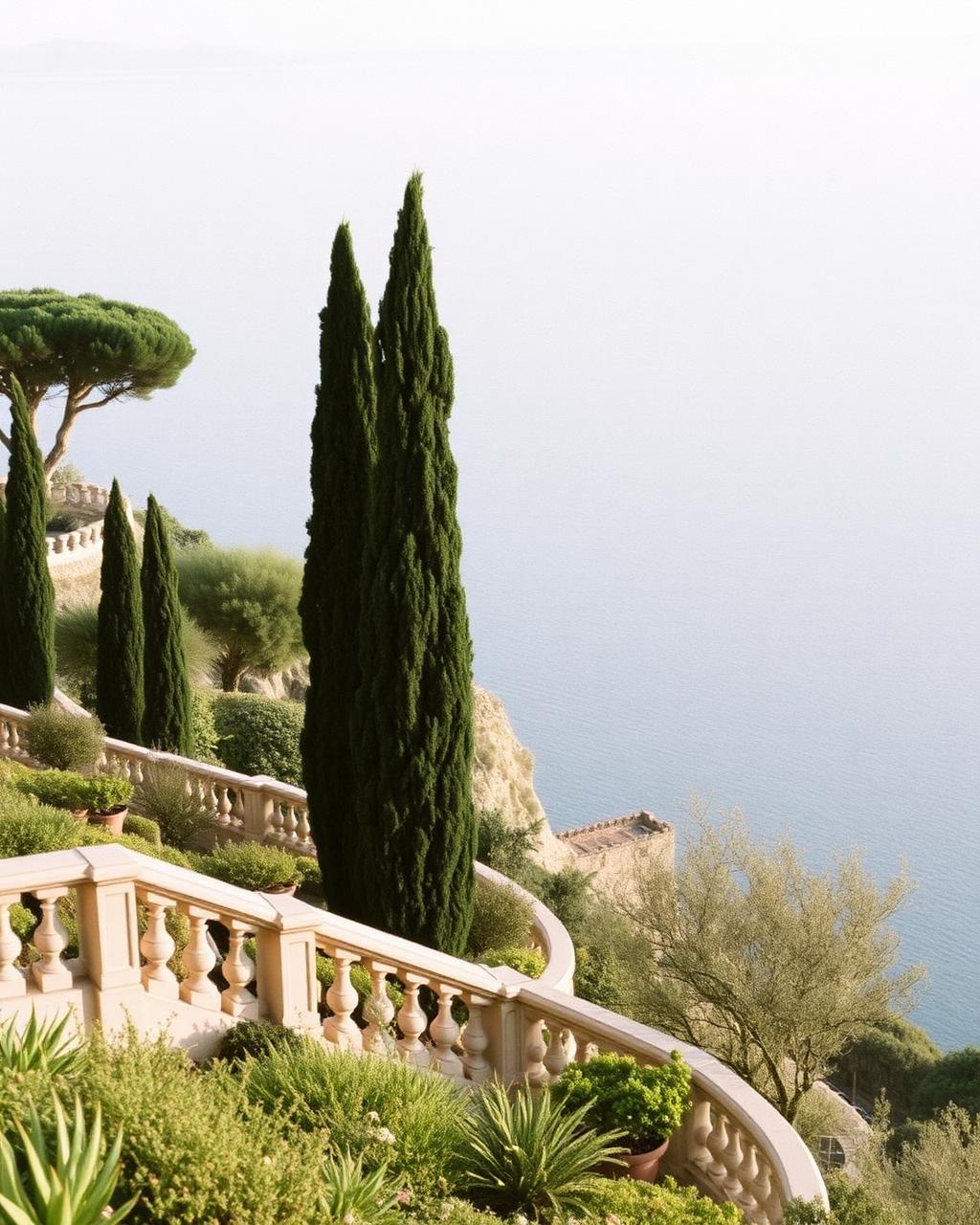
Ravello sits high above the coast, three hundred and fifty metres up, reached by a winding drive that itself is worth the trip. The town is a small, quiet cluster of palazzos, terraced gardens and cliff-edge belvederes — and the two great villas open to visitors, Villa Rufolo and Villa Cimbrone, are among the most photographed gardens in Italy for good reason.
The Terrace of Infinity at Villa Cimbrone is, without exaggeration, one of the most romantic views in Europe: a marble balustrade lined with classical busts, ending abruptly a thousand feet above the Tyrrhenian. Go at ten in the morning when the light is clear. Come back for sunset if you can.
Ravello is also the coast's classical music capital — the Ravello Festival runs from June through September, with concerts held in the Villa Rufolo gardens on a stage that extends over the sea. Book a ticket. Wear something you can dress up. If you are coming up from Positano or Amalfi for the day, a guided excursion to Ravello and the hill villages spares you the parking, which on this road is not a small thing.
Should you rent a car?
The coast's SITA buses connect the main villages competently, and the summer ferry is the most beautiful way to move between Positano, Amalfi and Salerno. But if your itinerary includes Ravello, Minori, Maiori, Praiano or the smaller villages tucked into the hills behind the coast, a car changes the experience entirely — you stop when the light is right, take the corner that leads to a lemon terrace, and time the day around the view rather than a timetable.
The Amalfi Drive itself is part of the reason to come. Driven slowly, with the windows down, it is one of the most beautiful stretches of tarmac in Europe. A morning spent between Praiano and Vietri sul Mare — pulling over at the belvedere above Furore, stopping for an espresso in a village square — is a memory no organised transfer replicates.
A few practicalities are worth respecting. Choose the smallest car the rental desk offers; the coastal road narrows sharply through the villages, and a compact makes the difference between ease and stress. Book well in advance for July and August. And check parking before you commit to a hotel — most of the coastal towns require you to leave the car in a paid lot at the entrance and walk in.
Atrani
Atrani is the coast's best-kept secret — a tiny fishing village of eight hundred people, tucked into a ravine directly next to Amalfi, connected by a short tunnel and reachable on foot in five minutes. It has none of Amalfi's cruise-ship traffic and none of Positano's boutique-hotel bustle. It has a small pebble beach, a piazza with three cafés, and a warren of stepped alleyways behind the church.
This is where you come for a quiet aperitivo, a plate of fresh anchovies and a swim without a chaise longue. Le Arcate on the piazza is the only address you need. Come at seven in the evening, watch the local children play football against the church wall, and understand something the more famous villages have forgotten.
The best beach clubs
The Amalfi coast has few large beaches — it has coves, cliffside platforms and small, private clubs that rent umbrellas and chaises by the day. Book them the morning before, always.
- La Fontelina, Capri — technically Capri, but reachable by boat and unmissable. Umbrellas on a rocky platform, the best carpaccio on the coast; pair it with a day trip to Capri by boat.
- Da Adolfo, Laurito (near Positano) — a rustic wooden-shack beach club reached only by a small red boat that leaves from Positano. Grilled fish, cold rosé, no signal — and an easy add-on to a morning swim-stop cruise along the coast.
- One Fire Beach, Praiano — modern, minimalist, the best sound-system on the coast for an afternoon that turns into an evening.
- Marina di Praia — a tiny natural cove between Positano and Amalfi, with two small beach clubs and impossibly clear water.
- Il Riccio, Capri — the beach club of the Capri Palace hotel; understated, exquisite, with the best sea-view lunch on the island.
Luxury hotels
Where you stay on the Amalfi Coast is the trip. These are our editors' four favourites — each entirely different in character, all worth planning a year around.
- Le Sirenuse, Positano — the coast's most famous hotel for a reason. Deep-red facade, terrace bar with the finest view of Positano, exceptional service.
- Hotel Santa Caterina, Amalfi — clifftop, family-owned, gloriously old-world. The sea-water pool is legendary.
- Palazzo Avino, Ravello — a 12th-century palazzo turned hotel, high above the coast. Ideal for a slower, more classical stay.
- Casa Angelina, Praiano — a modern, all-white hotel between Positano and Amalfi with the best-designed rooms on the coast.
Boutique shopping
Shopping on the Amalfi Coast is small and specific — hand-made sandals, ceramics, embroidered linen, straw bags. This is not the place to hunt down luxury handbags; it is the place to leave with things you cannot find anywhere else.
- Antica Sartoria, Positano — the coast's iconic floaty white linen dresses.
- Emanuela Caruso, Positano — bespoke leather sandals made in twenty-four hours.
- La Bottega dei Ricordi, Amalfi — hand-painted ceramics from the local workshops.
- Ceramica Assunta, Positano — the more collectible ceramics address, direct from the artisans.
- Profumi di Positano — beautiful bergamot, jasmine and lemon fragrances made from local citrus.
Restaurants worth the reservation
The Amalfi Coast is not the place for tasting menus — the pleasure is in a plate of vongole, a bottle of Fiano and a table with a view. That said, a few reservations are worth planning around.
- La Sponda at Le Sirenuse — 400 candles lit each evening, one Michelin star, the coast's most romantic dinner.
- Il Refettorio at Monastero Santa Rosa, Conca dei Marini — a converted monastery with an infinity pool and a chef who cooks like the coast should be cooked.
- Da Gemma, Amalfi — a family-run classic since 1872; the pasta with sea urchin is worth ordering.
- Lo Scoglio, Nerano — a table on stilts over the water, an hour's boat ride from Positano; the spaghetti alla Nerano is the dish of the summer.
- Ristorante Rossellinis, Palazzo Avino — clifftop dining in Ravello with the coast's finest wine list.
Sunset aperitivo spots
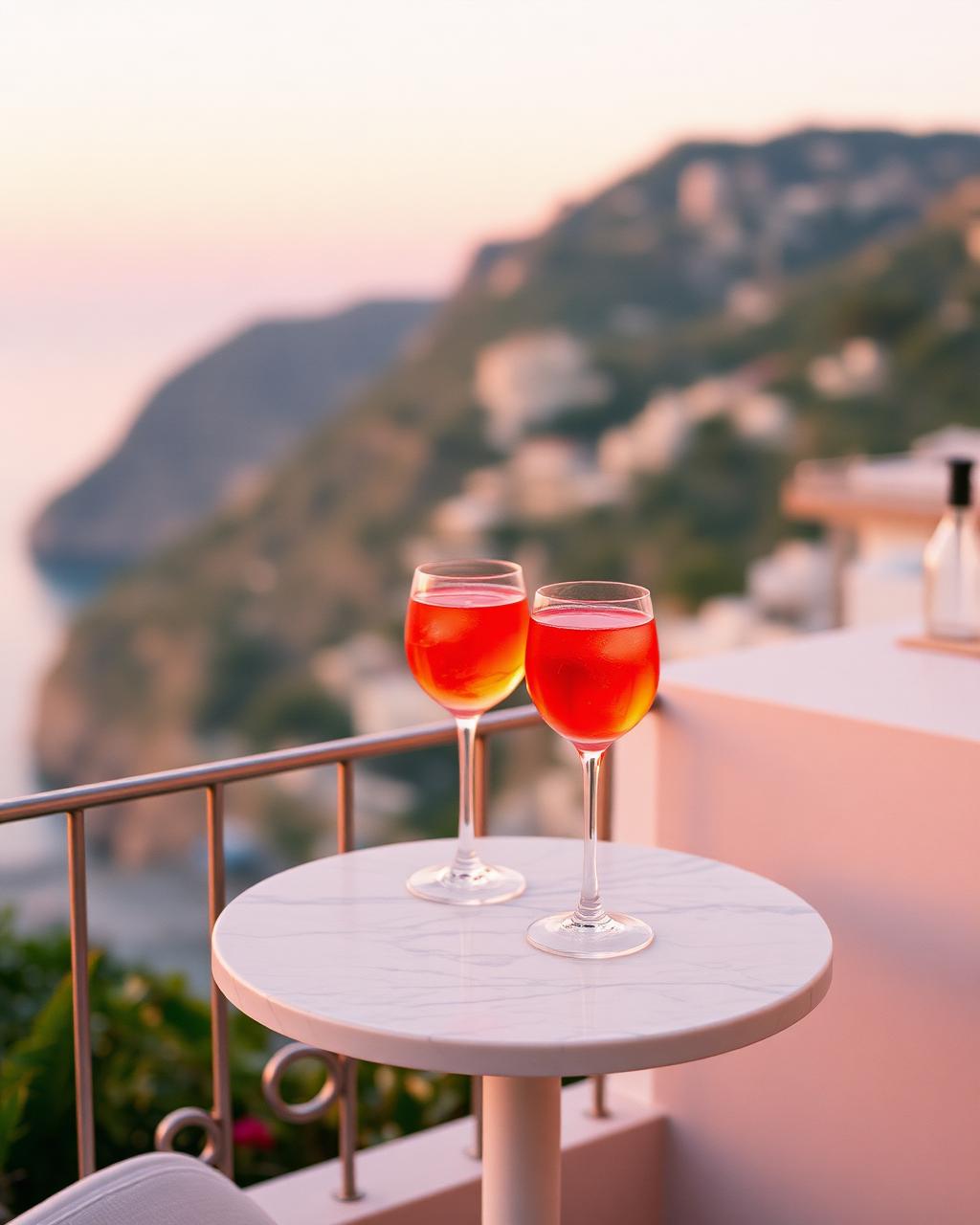
The Amalfi sunset is not a spectacle so much as a ritual — a slow shift in colour from gold to peach to violet, watched from a terrace with a cold negroni sbagliato in hand.
- Franco's Bar, Positano — Le Sirenuse's rooftop bar, quite possibly the most photographed sunset drink in the world.
- Belvedere, Ravello — the public terrace at Villa Rufolo; the view is free and unmatched.
- Music on the Rocks, Positano — a bar built into a cliff face at sea level, where the coast's evenings unofficially begin.
- Il Faro di Capo d'Orso, Maiori — one Michelin star and a lighthouse terrace; sunset from here is the coast's best-kept secret.
Boat tours worth taking
The Amalfi Coast is best seen from the water. Renting a private wooden gozzo boat for a day is the coast's most rewarding splurge — you set your own itinerary, swim in coves that road-bound visitors never see, and eat lunch wherever your captain recommends. Full-day coastal cruises and private charters with a skipper both exist at every budget; the difference is only how many people share the deck.
Book a full day, from ten to five. Ask your hotel to arrange it; a good captain is worth the difference. The classic route: leave from Positano, swim in the Grotto della Sponda, lunch at Da Adolfo, an afternoon at Nerano's Marina del Cantone, and back for aperitivo.
The Amalfi Coast rewards slowness. Book fewer restaurants than you think you should. Leave a day empty in every three. Come back to the same café for coffee every morning until the waiter knows your order.
If you want one cultural day away from the water, the ruins at Pompeii are forty minutes from the coast and best seen early with a guide — this guided visit is the version our editors recommend. And for a last afternoon, a lemon grove and limoncello tasting above the coast is the sort of small, unhurried experience the Amalfi is actually about.
The great pleasure of this coast is not what you see. It is the pace at which you see it.
Continue reading: Santorini Travel Guide — Luxury Hotels, Beautiful Cafés and Hidden Gems and The Most Beautiful Streets in Paris for Fashion Lovers.