The Beauty Edit Guide to Provence — Lavender Fields, Villages & French Summer
Perched stone villages, lavender in bloom and the slow, generous rhythm of a French summer afternoon — an editorial guide to the region that invented the art of doing nothing beautifully.
By Camille Fontaine · July 27, 2026 · 13 min read
Provence is not a single place so much as a mood — a slow, rose-scented, cicada-loud way of being that begins somewhere south of Avignon and ends, unofficially, at the first sight of the sea. It is the France of stone farmhouses and dusty olive groves, of village markets under plane trees, of long lunches that turn into longer afternoons and rosé at eleven in the morning without apology.
This is a region that rewards a car, a loose plan and a willingness to leave the main road for the smaller one. The great pleasures are not monuments; they are the smell of a lavender field in July, the shade of a village square in August, a plate of ratatouille eaten outside at nine in the evening while the swallows circle the church tower.
What follows is an editor's guide to the Luberon and the surrounding Provençal villages — the hotels worth planning around, the markets worth waking up for, the interior-design shops worth reserving a suitcase for, and the small rituals that turn a week here into an education in doing less, better.
Why you'll love Provence
Provence has been the summer retreat of writers, painters and quietly wealthy Parisians for two centuries for a very specific reason: the light. Cézanne spent forty years trying to paint it; Van Gogh moved to Arles because of it; Peter Mayle wrote a bestseller about the difficulty of leaving it. The light in Provence is not merely bright — it is a particular pale gold that softens the ochre facades of the villages, saturates the greens of the olive trees and turns every stone wall into a photograph.
You will love it for the small daily pleasures. A café crème and a croissant at a village square before the market sets up. A morning drive through the Luberon with the windows down. A long lunch under a plane tree with a bottle of chilled rosé from a domaine down the road. A late-afternoon swim in the pool of a converted farmhouse. Dinner outside, always outside.
This is not a destination for a checklist. It is a destination for coming back to the same village square for coffee three days in a row until the waiter starts to bring your order without asking.
Gordes — the perched village
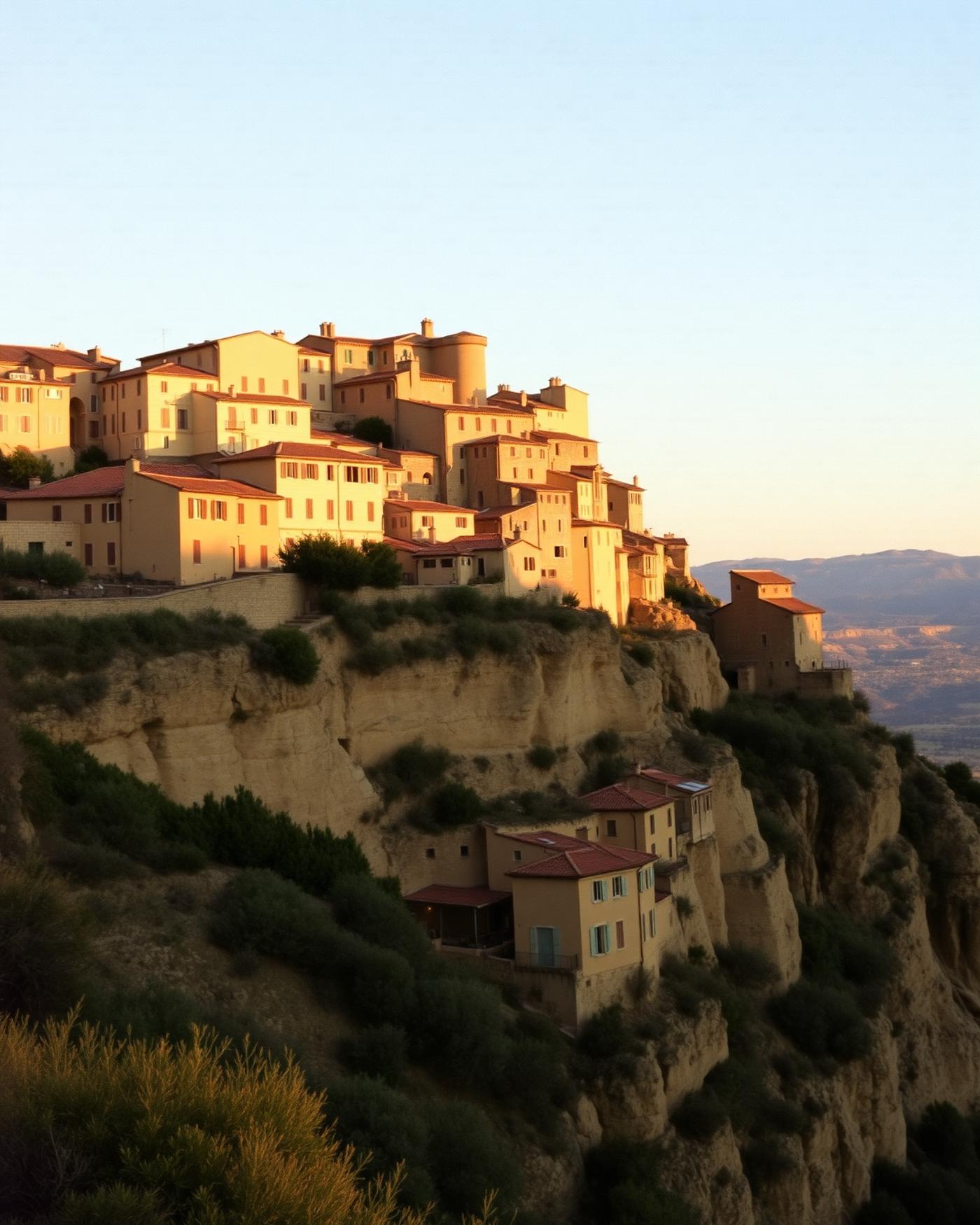
Gordes is the postcard of Provence — a honey-coloured village stacked improbably against the face of a cliff, visible from ten miles away, more photographed than any other village in the Luberon. Its reputation is entirely earned. The best view is from the small road that approaches from Cavaillon; pull over at the belvedere, take the photograph, then drive on into the village itself.
Once inside, Gordes rewards a slow morning. Wander the stone lanes. Have a coffee on the terrace at Le Cercle Républicain, the local café with the best village-view seats. Visit the Abbaye de Sénanque, a twelfth-century Cistercian monastery ten minutes away, surrounded by a lavender field that, in early July, is the most photographed square kilometre in France.
For lunch, drive fifteen minutes down the hill to Bastide de Gordes for the finest terrace in the region, or to the more casual La Bastide de Pierres for a truffle omelette and a glass of local white.
Roussillon, Lourmarin & Saint-Rémy
The Luberon is a small region, but it holds a handful of villages each with a distinct personality worth a day. Roussillon is the ochre village — its buildings painted in the reds and oranges of the natural pigments mined from the cliff behind it; the Sentier des Ocres, a short walking trail through the old pigment quarries, is one of the region's most surprising walks.
Lourmarin is the fashionable one — a small, elegant village on the southern slope of the Luberon, with the region's best Friday market, the château where Camus is buried, and a growing collection of design-forward hotels and restaurants. It is a good base for a slower week.
Saint-Rémy-de-Provence, further west, is the Van Gogh village — the asylum of Saint-Paul-de-Mausole where he painted the Irises and the Starry Night is a moving, quiet visit, and the Wednesday market in Saint-Rémy is the largest and most famous in Provence. This is also the closest village to Les Baux-de-Provence and the Carrières des Lumières, a sound-and-light show in a converted quarry that is worth the detour.
Lavender fields — where and when
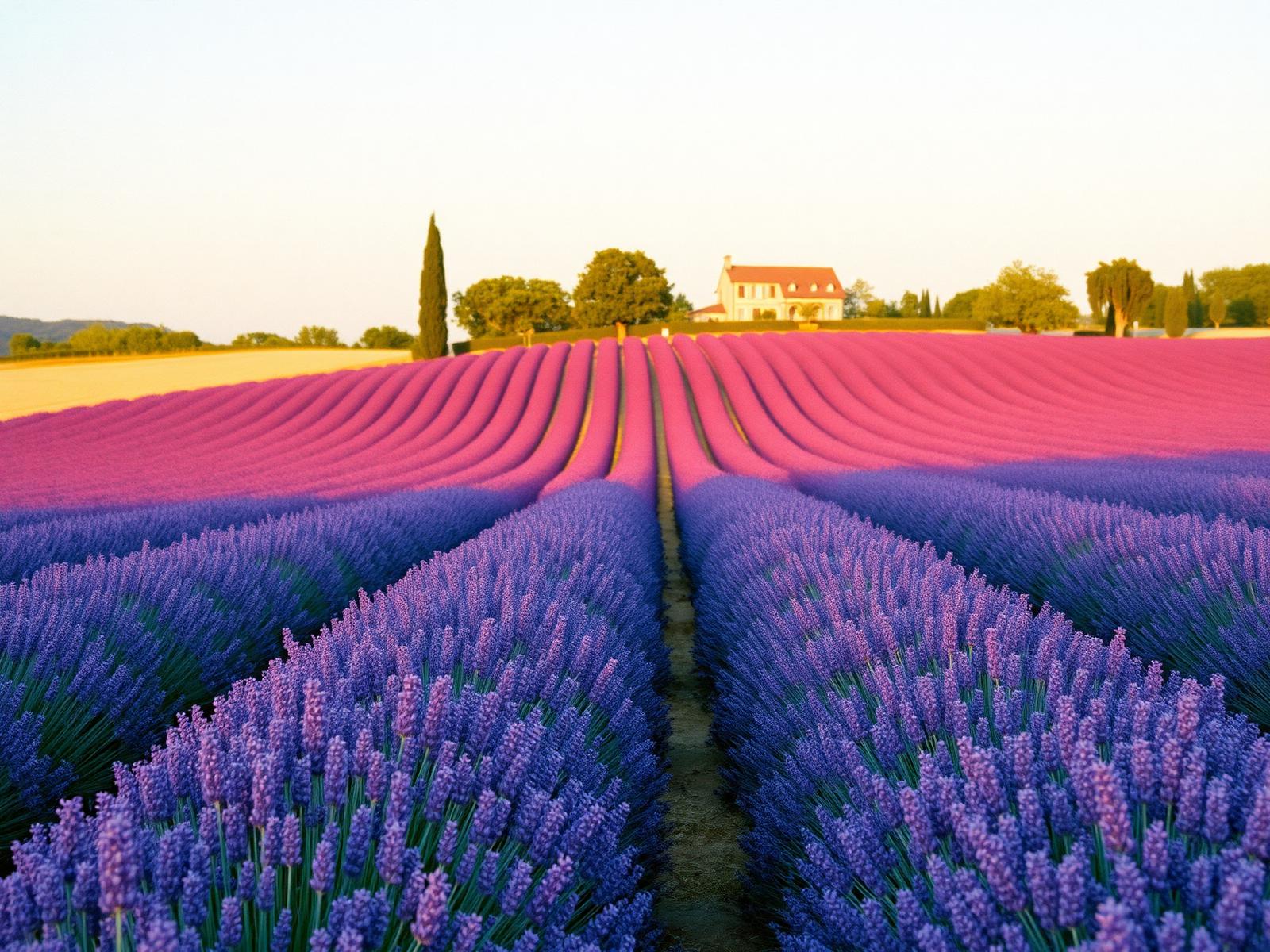
The Provençal lavender bloom is short, spectacular and worth planning the entire trip around. The fields flower from late June to early August, with the peak between about 5 and 20 July — but check current-year timings before you go, as the season shifts a week or two with the weather.
- Abbaye de Sénanque, near Gordes — the classic image, a twelfth-century abbey surrounded by lavender rows. Go at 8 a.m., before the tour buses.
- The Valensole plateau — the largest, most cinematic lavender landscape, an hour east of the Luberon. Rows stretch to the horizon; the perfect place for the wide-open field photograph.
- Sault plateau — the highest lavender fields in Provence, which bloom two weeks later than the rest — a good back-up if you arrive after the main season.
- Musée de la Lavande, Coustellet — a small, well-curated museum on the history of lavender distillation, with a shop full of the region's most beautiful essential oils and eau de toilette.
Best luxury hotels
Provence's great hotels are, in the best cases, converted farmhouses (mas), monasteries or bastides — old buildings restored with taste, set in olive groves or vineyards, with proper pools and terraces made for long afternoons.
- La Coquillade Provence Village, Gargas — a hilltop hamlet turned into a village-scale luxury hotel, surrounded by its own vineyards, with three restaurants and a five-star spa.
- Le Mas de Pierre, Saint-Paul-de-Vence — a Provençal farmhouse hotel with lavender gardens, three pools and one of the finest spas in the south.
- Villa La Coste, Le Puy-Sainte-Réparade — a contemporary architect-designed hotel on a working vineyard and sculpture park; the most design-forward stay in the region.
- Château de Berne, Lorgues — a wine estate hotel in the Var, with two restaurants (one Michelin-starred), a spa and its own rosé you can drink at every meal.
- Bastide de Gordes — the classical grande dame, on the ramparts of Gordes, with the finest sunset terrace in the region.
Best boutique hotels
The smaller, family-run addresses are, for many travellers, the truer Provençal experience — twelve rooms, a shaded terrace, the owner's own vegetable garden, a swimming pool at the end of an olive grove.
- La Bastide de Marie, Ménerbes — a twelve-room farmhouse hotel in the middle of a working vineyard, with an exceptional terrace restaurant.
- Le Phébus & Spa, Joucas — a Relais & Châteaux hotel with a small footprint and a Michelin-starred restaurant.
- Domaine des Andéols — a hamlet of nine restored village houses, each with its own pool, in the hills above Saint-Saturnin.
- La Maison Molière, Lourmarin — an intimate six-room hotel in the centre of Lourmarin, ideal for the market and the village restaurants.
- Le Mas des Poiriers, Avignon — a family-run mas outside Avignon, with cypress-lined gardens and an unbeatable breakfast.
Best cafés
The French village café is a small daily ritual. In Provence, take it slowly, outside, always with a view.
- Café de la Fontaine, Lourmarin — the classic on the main square; the best people-watching in the Luberon.
- Le Cercle Républicain, Gordes — a proper village bar with the best village-view terrace.
- Café des Arts, Roussillon — under the ochre walls, with a shaded terrace and a good tarte aux fruits.
- Le Bistrot du Paradou, Le Paradou — legendary for its steak-frites lunch, but drop in mid-morning for the coffee and the atmosphere.
- Café des Arcades, L'Isle-sur-la-Sorgue — the antique-market village's most beautiful café, on the shaded arcade above the Sorgue river.
Best restaurants & long lunches
Provence is a region for long, slow, wine-heavy lunches — often the meal you will remember longest from the trip. A short list of addresses to reserve around.
- La Bastide de Capelongue, Bonnieux — Édouard Loubet's Michelin-starred restaurant, in a hilltop bastide with olive groves down to the valley.
- L'Oustau de Baumanière, Les Baux — a three-Michelin-starred institution in the Alpilles, worth the trip and the fixed menu.
- Le Mas Tourteron, Gordes — a lush garden restaurant under fig trees; the region's most romantic long lunch.
- La Petite Maison de Cucuron — a village bistro that has become a place of pilgrimage; the daube is the dish of the summer.
- Chez Bru, Éygalières — a Michelin-starred village restaurant with a terrace under old plane trees; the tasting menu is the meal.
The smartest way to explore Provence
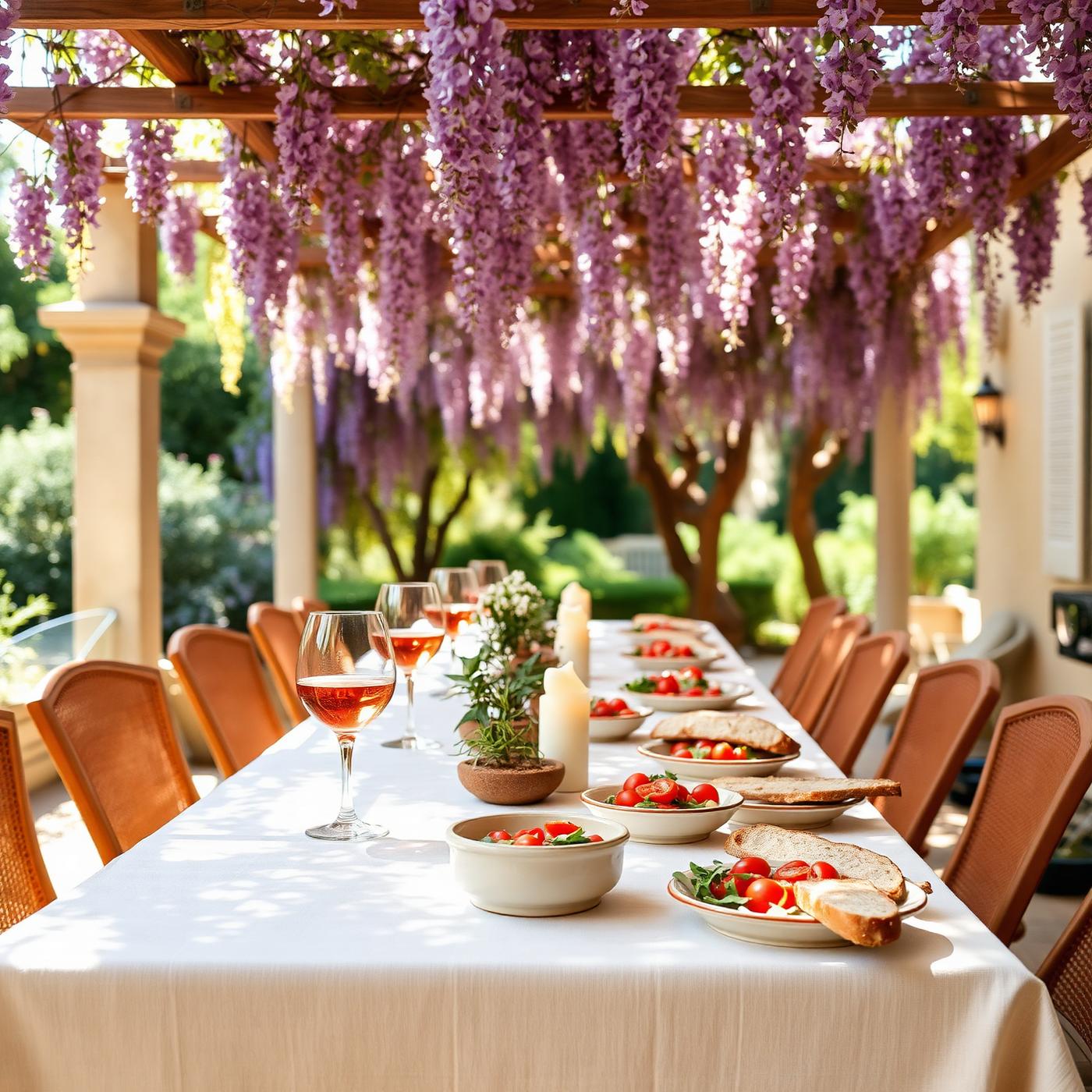
Provence is not a destination you visit; it is a landscape you move through. The pleasure of the region lives in the drive between things — a morning market in Lourmarin, a long lunch on a farm outside Ménerbes, a domaine tasting at four, a hilltop village for aperitivo, dinner back at the mas. Almost none of this is reachable by train, and the local buses run on schedules that assume you live there.
A car is, quite simply, part of the Provençal experience. The back roads through the Luberon and the Alpilles are some of the most beautiful in France — plane-tree tunnels, ochre cliffs, fields of lavender that appear suddenly around a bend. You will stop more often than you plan; that is the point.
Reserve well in advance for June, July and early September, when the region is at its busiest. A compact car handles the narrow village lanes and modest car parks with far more grace than an SUV. And in the medieval villages — Gordes, Roussillon, Ménerbes — expect to park at the edge of town and walk in. It is a small ritual that only improves the arrival.
Wine experiences
Provence is the world capital of pale rosé — the summer wine that pairs with everything and nothing, and that has quietly become one of the most collectible categories in modern winemaking. Half a day at one of the great domaines is one of the region's finest pleasures.
- Domaine d'Ott, Château de Selle — the most iconic name in Provence rosé, an hour east of Aix; the vineyard tour and tasting are the classic.
- Château Miraval, Correns — the Brad Pitt / Angelina Jolie domaine, now one of the most acclaimed rosés in the region.
- Domaine de la Citadelle, Ménerbes — a beautiful Luberon domaine with a small corkscrew museum and one of the region's best rosés.
- Château La Coste, Le Puy-Sainte-Réparade — a wine estate that doubles as an open-air museum with sculptures by Louise Bourgeois, Ai Weiwei and Frank Gehry.
- Château Léoube, Bormes-les-Mimosas — a coastal organic domaine near Saint-Tropez, with a beach-side restaurant on their private cove.
The Provençal markets
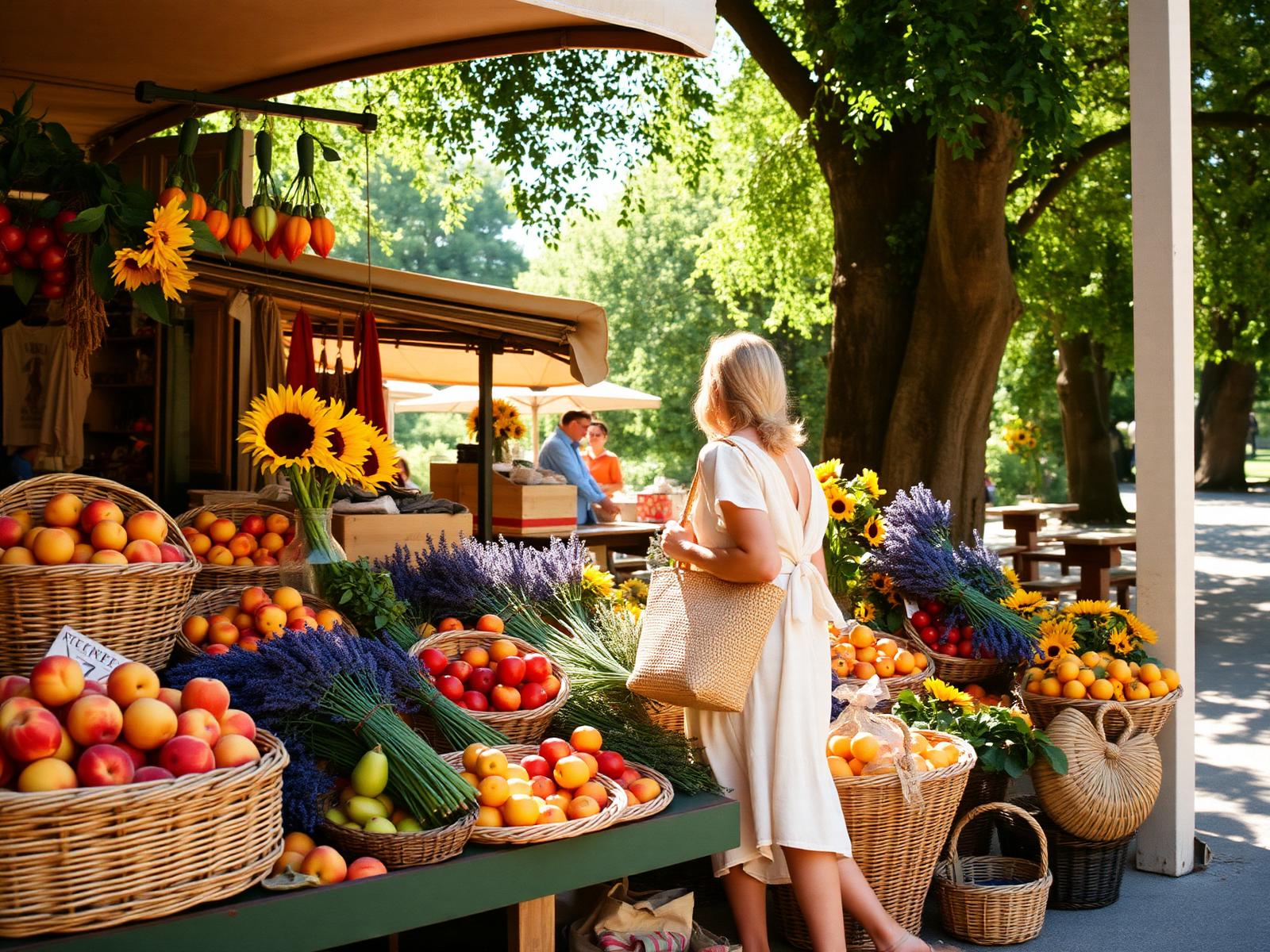
The village market is the beating heart of a Provençal week — a two-hour ritual of tomatoes, tapenade, lavender bunches, straw baskets, olive oil, honey and the specific pleasure of buying dinner from ten different stalls under a plane tree.
- Wednesday, Saint-Rémy-de-Provence — the largest and most famous market in the region.
- Friday, Lourmarin — the most fashionable Luberon market; the produce is exceptional and the crowd is well-dressed.
- Sunday, L'Isle-sur-la-Sorgue — the great antique and flea market, along the canals; a full-day expedition and one of the finest brocantes in Europe.
- Tuesday, Gordes — the classic Luberon village market in a spectacular hilltop setting.
- Saturday, Apt — the largest general market in the Vaucluse, unpolished and completely authentic.
Best shopping — interiors & antiques
Provence has a long tradition of decorative arts — printed cottons, hand-thrown ceramics, hand-blown glass, restored antique linens. The region's shops are quietly among the finest in Europe for a slower, more considered kind of decorating.
- L'Isle-sur-la-Sorgue — the antiques capital of southern France, with more than three hundred dealers concentrated in and around the town.
- Le Village des Antiquaires de la Gare, L'Isle-sur-la-Sorgue — the largest single antiques village, open weekends.
- Édith Mézard, Lumières — the region's most exquisite hand-embroidered linens, in a converted château.
- Souleiado, Tarascon — the historic Provençal printed-cotton house; the flagship boutique and museum are worth the drive.
- La Boutique du Château, Ansouis — small-batch Provençal ceramics, olive oils and beauty products from local artisans.
Most beautiful photo spots
Provence is unfairly photogenic. A short list of the reliably beautiful spots to build a morning around.
- The belvedere road above Gordes — the classic hilltop-village photograph.
- The Sénanque abbey lavender field — early July, at eight in the morning.
- The ochre cliffs of Roussillon — best at late afternoon when the pigments turn deep red.
- The plane-tree square in Lourmarin — dappled light and market atmosphere on Friday mornings.
- The Valensole plateau — rows of lavender to the horizon; drive the D6 in early July.
- The Pont du Gard — the great Roman aqueduct, at golden hour, with the Gardon river below.
What to wear in Provence
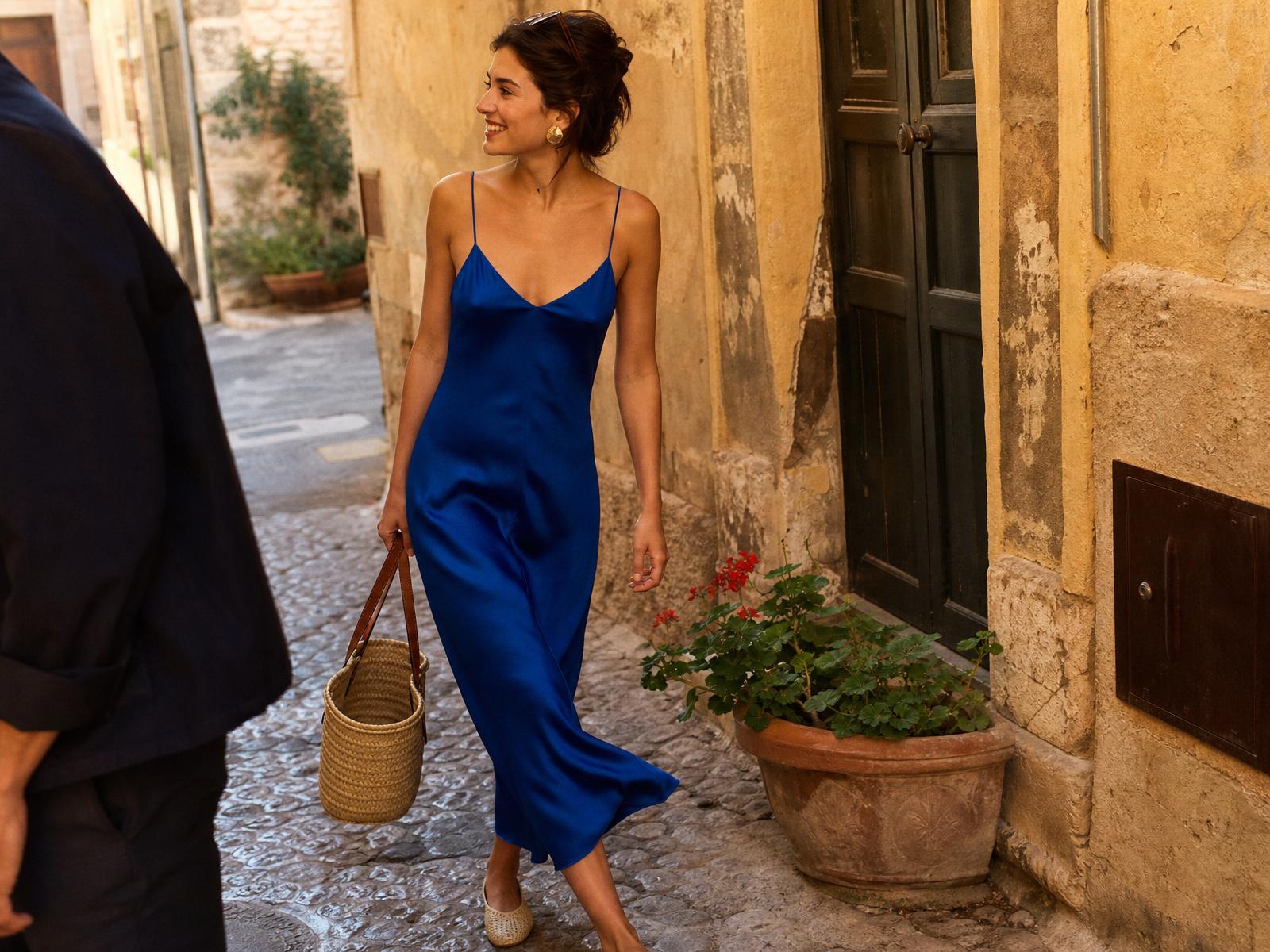
Provence has a specific summer uniform: relaxed, natural fabrics, warm neutrals and a straw hat. The style is closer to a linen ease than a beach-resort mood. Cream trousers, an oversized white shirt, a straw basket, a linen midi dress in ochre or olive, flat leather sandals, a wide-brim hat. Nothing tight; nothing shiny.
For evening in the villages, elevate slightly: a longer linen dress in cream or terracotta, low leather heels or a pair of considered flats, gold hoops, and a light cotton or linen jacket for after the sun goes down (Provence cools quickly in the evening; the mistral wind can be brisk).
For a more detailed palette, our companion piece Color Combinations for Outfits: Elegant Pairings That Look Expensive covers the olive-and-cream and terracotta-based combinations that photograph beautifully against a Provençal stone wall.
Beauty essentials for the trip
The Provençal summer is dry, sunny and windy — a combination that dehydrates skin faster than a coastal climate. The essentials: a high-protection SPF, a rich night cream, a hydrating mist and a good lip balm. Skip heavy makeup; the light does the work.
A pot of the region's most famous product — lavender essential oil from a local distillery — is worth adding to the routine for its calming properties before sleep. Local rose-based skincare (from Terre d'Oc or Le Couvent des Minimes) makes the trip's most beautiful souvenir.
For a deeper protocol, our companion piece European Summer Beauty Rituals covers the exact daily ritual that photographs the best.
The perfect 3-day itinerary
Three days in the Luberon is enough to see the region properly, without rushing. This is our editors' preferred rhythm.
- Day 1 — Gordes & Sénanque. Morning coffee in Gordes. The Abbaye de Sénanque and its lavender field. Lunch at La Bastide de Gordes. Afternoon at the pool. Aperitivo and dinner in the village.
- Day 2 — Roussillon, Lourmarin & the small villages. The ochre trail at Roussillon in the morning. Drive south through the Luberon to Lourmarin. Long lunch in the village. Late-afternoon browsing the boutiques. Dinner at Chez Bru in Éygalières.
- Day 3 — L'Isle-sur-la-Sorgue & a domaine. The Sunday antique market from ten. Lunch on the canals. Afternoon at Domaine de la Citadelle or Château La Coste for a tasting and a walk through the sculpture park. Dinner in Ménerbes at La Bastide de Marie.
Best time to visit
The Provençal season runs from April through October. The very best months are May, June and September — the light is soft, the villages are quiet, the terraces are open and the accommodation is available. For the lavender in bloom, aim for the second week of July.
August is peak season — hot, crowded and expensive; French holiday-makers descend on the region and the smaller villages can fill quickly. It has its own energy, but the more considered traveller should try for the shoulder months instead. April and October offer a Provence with almost no visitors, cooler temperatures, and a gentler pace — a different, quieter version of the same region.
Final thoughts
Provence's genius is that it demands so little of the traveller. There is no monument you must see, no ceremony you must attend, no queue you must join. The region simply exists — its markets, its rosé, its lavender, its light — and asks only that you slow down enough to notice.
Rent the farmhouse with the pool. Buy the straw basket at the first market you visit. Go back to the same café every morning. Learn the waiter's name. Come home with three bottles of rosé and a pot of lavender honey.
Continue reading: The Beauty Edit Guide to Saint-Tropez and The Most Beautiful Streets in Paris for Fashion Lovers.