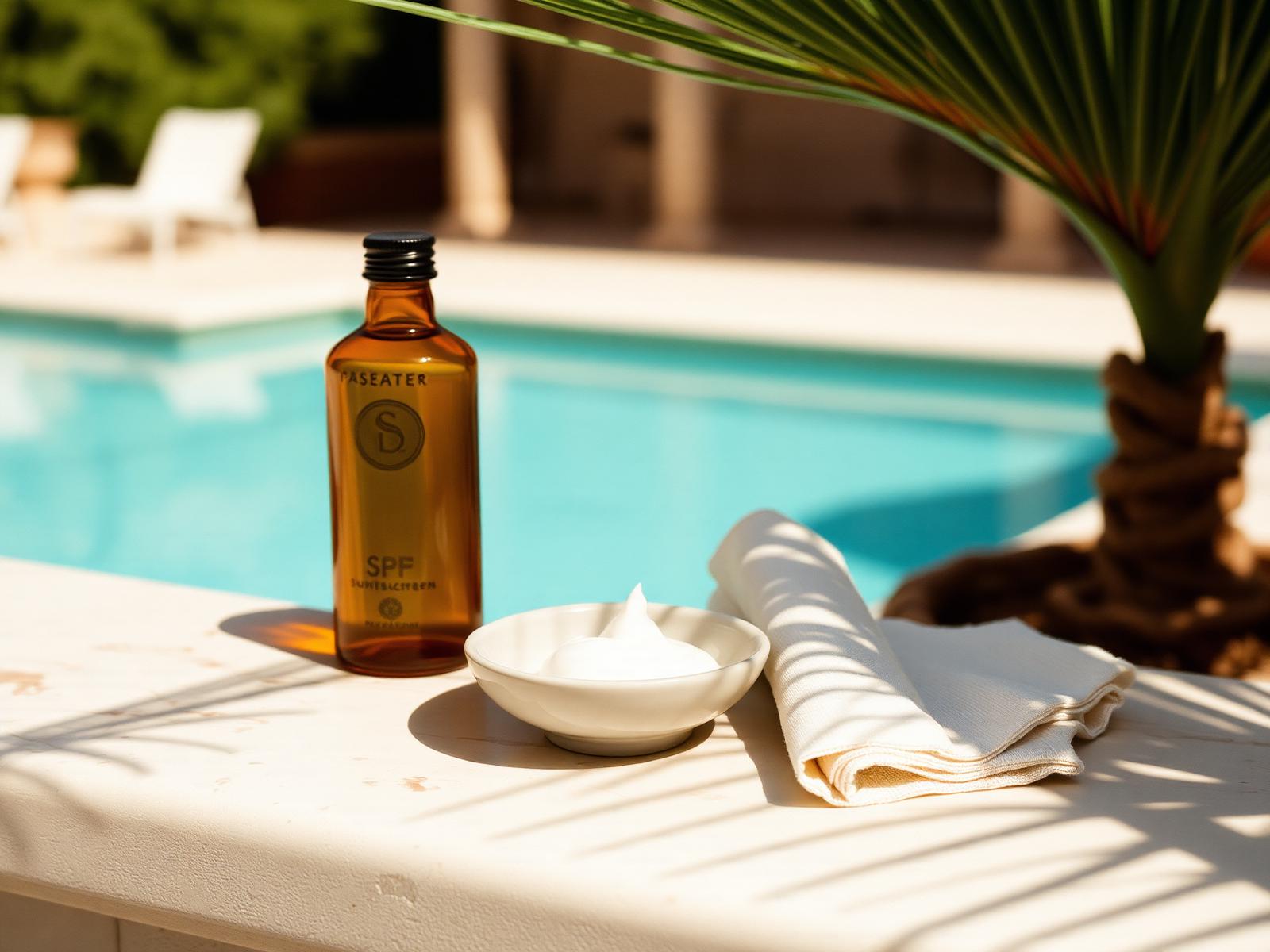
The Best Luxury Sunscreens for Every Skin Type (2026 Edition)
The editors' definitive guide to sun protection this year — the formulas that feel like skincare, the myths worth retiring, and the sunscreen that quietly outperforms the rest for your skin.
By Dr. Camille Fournier · July 5, 2026 · 13 min read
Ask any dermatologist which single product does the most for your skin over a lifetime, and the answer is always the same: sunscreen. Not vitamin C, not retinol, not the serum you queued for last spring. Sunscreen.
For years, that answer arrived with a caveat — the formulas were chalky, the finish was white, the smell was medicinal. Applying SPF was a discipline, not a pleasure. That era is, mercifully, over. In 2026 we are living through what might reasonably be called the golden age of sunscreen: elegant textures, sophisticated filters, formulas that behave like skincare and photograph like a good highlighter.
This is our editors' definitive guide to the year's best luxury sunscreens — organized by skin type, use case and season. Consider it a working document for the summer ahead.
Chemical vs Mineral: What You Actually Need to Know
The first decision most people make about sunscreen is chemical or mineral — and it is worth understanding what the choice actually means before you commit to one.
Chemical (organic) sunscreens use filters like avobenzone, octocrylene, tinosorb and mexoryl to absorb UV radiation and convert it into a small amount of heat. They tend to feel lighter on the skin, wear invisibly, and sit beautifully under makeup. The newer European and Asian filters — bemotrizinol, bisoctrizole and the Uvinul series — offer excellent broad-spectrum protection and are far gentler than the previous generation of chemical filters.
Mineral (physical) sunscreens use zinc oxide or titanium dioxide to reflect and scatter UV rays. Modern micronized formulas have solved most of the old white-cast problem, though a whisper often remains, particularly on deeper skin tones. Mineral filters are the safer choice for very sensitive, reactive or post-procedure skin, and are generally recommended for infants and during pregnancy.
The most sophisticated formulas of 2026 are hybrid — pairing zinc oxide with modern chemical filters for a broader UV shield and a more elegant finish. If you have been told mineral is the only responsible choice, that recommendation is a decade out of date.
For Sensitive Skin
Sensitive skin does best with mineral or hybrid formulas that skip fragrance, essential oils and drying alcohols. Look for zinc oxide as the primary filter, ideally paired with soothing ingredients like niacinamide, panthenol, centella asiatica or squalane.
Editors consistently recommend La Roche-Posay Anthelios UVMune 400 Fluid, ISDIN Eryfotona Ageless, and Avène Intense Protect 50+. For those with truly reactive skin, EltaMD UV Clear remains the dermatologist favourite — non-comedogenic, fragrance-free, and endorsed by more skincare professionals than any other brand.
For Oily and Acne-Prone Skin
The old assumption that sunscreen breaks out oily skin has been quietly debunked by the current generation of formulas. What you want here is a lightweight, oil-free fluid with a semi-matte finish — ideally one containing niacinamide to help regulate sebum.
The current editor's shortlist: La Roche-Posay Anthelios UV-Mune 400 Oil Control, EltaMD UV Clear SPF 46 (with niacinamide), Supergoop! Unseen Sunscreen, and ISDIN Fusion Water. Ultra Violette's Queen Screen also earns high marks for its lightweight, non-greasy finish that layers well under makeup.
Look for the words 'non-comedogenic' and 'oil-free.' Avoid heavy occlusives, coconut oil derivatives, and anything with a rich, buttery finish.
For Dry and Mature Skin
Dry and mature skin benefits from sunscreens that behave like moisturizers — cushioned, hydrating, often infused with peptides, hyaluronic acid, ceramides or squalane. A radiant finish here is not just cosmetic; it makes the skin look younger and more supple.
Editors love SkinCeuticals Ultra Facial Defense SPF 50, Shiseido Ultimate Sun Protector Lotion, ISDIN Eryfotona Ageless (with DNA-repair enzymes), and Chantecaille Ultra Sun Protection. For a genuinely luxurious finish, Sisley Super Soin Solaire and La Prairie Cellular Swiss UV Protection are the reference points.
Layer over a hydrating serum and a rich moisturizer for the plumpest, most luminous finish.
For Hyperpigmentation and Melasma
If you are treating hyperpigmentation, dark spots or melasma, sunscreen is not optional — it is the single most important product in your routine. Look for broad-spectrum SPF 50 protection with iron oxides, which block the visible light that contributes to melasma.
The gold-standard recommendations: ISDIN Eryfotona Ageless (with iron oxides and DNA-repair enzymes), SkinCeuticals Advanced Brightening UV Defense (paired with tranexamic acid), Ultra Violette Fair Skin Screen, and Colorescience Sunforgettable Total Protection Face Shield. The tinted versions are particularly effective for melasma-prone skin.
Reapply every two hours in direct sun. This is the non-negotiable of pigmentation care.
For Outdoor Activities, Water and Sport
For genuine sun exposure — the beach, hiking, tennis, sailing — you need a water-resistant formula rated for at least 80 minutes. Look for filters that hold up under sweat and immersion, and reapply religiously.
Editor favourites for this category: Vichy Capital Soleil UV Age Daily, Supergoop! Play Everyday Lotion, La Roche-Posay Anthelios Melt-In Milk (a legendary body sunscreen), and Ultra Violette Extreme Screen. For faces during sport, ISDIN Fusion Water Magic and EltaMD UV Sport are both excellent.
One rule from every dermatologist we asked: no matter how expensive your sunscreen, if you apply too little, it does not work. A full teaspoon for the face and neck, a full shot glass for the body. Every time.
Makeup Compatibility: The Sunscreen That Photographs
The sunscreen you wear under makeup is a different product from the one you wear on the beach. What you want here is a formula that sits invisibly, does not pill, and enhances rather than disrupts the finish of foundation.
Supergoop! Unseen Sunscreen has become an industry standard for this reason — a clear, silicone-based gel that acts as a primer. Ultra Violette Queen Screen offers a similar effect with a subtle glow. Chantecaille Just Skin Tinted Moisturizer SPF 30 doubles as skin tint. And for a proper luminous finish, Charlotte Tilbury Invisible UV Flawless Poreless Primer SPF 50 is the editor secret many are unwilling to name.
For heavier makeup wearers, look for formulas that dry down semi-matte and pair well with a setting spray. Test on the back of your hand under your usual foundation before committing.

SPF Myths Worth Retiring
A few pieces of received wisdom to leave behind this year:
- 'I don't need sunscreen if I'm indoors.' Windows block UVB but not UVA — the ageing rays. If you sit near a window, you need daily SPF.
- 'SPF 50 is barely more protective than SPF 30.' Technically true in a lab, functionally false in life. Most people apply half the recommended amount; SPF 50 gives you a real-world safety margin.
- 'My foundation has SPF, so I'm covered.' You would need to apply seven times the normal amount of foundation to reach the labelled SPF. Use a proper sunscreen underneath.
- 'Dark skin doesn't need sunscreen.' Melanin offers roughly SPF 13 of natural protection. Not enough to prevent hyperpigmentation, photoaging or, importantly, skin cancer.
- 'One application in the morning is enough.' Reapplication every two hours is what makes sunscreen work. A powder or mist over makeup makes this achievable.
How to Layer, Apply and Reapply
Sunscreen goes last in your morning skincare, before makeup. Give it a full two minutes to settle before applying foundation — the pilling you sometimes see is almost always the result of impatience, not incompatibility.
Apply a generous, level teaspoon to the face and neck. For reapplication over makeup, powder SPF (Colorescience Sunforgettable Total Protection Brush-On, Supergoop! (Re)setting Powder) or a mist (Kinship Self Reflect, Coola Setting Spray) is the elegant solution.
For the body: a shot glass full, every application. Rub in properly. The tops of the ears, the back of the neck, the tops of the feet, and the parting of the hair are the most commonly missed areas — and often the ones that later develop pigmentation or sun damage.
Frequently Asked Questions
Is chemical sunscreen bad for my skin? No. Modern chemical filters — particularly the European Tinosorb and Mexoryl families — are among the safest, most photostable filters available. The older concerns about oxybenzone and octinoxate have been largely addressed by newer formulations.
Do I need to reapply sunscreen indoors? If you are near a sunny window for extended periods, yes. If you are in a windowless office, one morning application is generally sufficient — but reapply before your evening commute or if you step outside for lunch.
Can I use body sunscreen on my face? You can, but you probably won't want to. Body formulas tend to be heavier and can clog pores or break down makeup. A dedicated facial sunscreen almost always feels better on the skin.
What SPF number should I actually be using? SPF 30 is the daily minimum; SPF 50 is what most dermatologists now recommend, especially for anyone with pigmentation concerns or sun exposure.
Is expensive sunscreen better than affordable? Not always — and this is important. La Roche-Posay, ISDIN and EltaMD are dermatologist-favourite brands at accessible prices that outperform many luxury alternatives. What you pay for at the higher end is finish, feel, and skincare-adjacent ingredients — not, generally, better UV protection.
Which sunscreen is best for tanning without burning? The honest answer: none. Sunscreen reduces the rate of UV damage but does not prevent tanning entirely. If you want colour, seek it in a self-tanner (Isle of Paradise, Tan-Luxe, St. Tropez) rather than the sun. Your dermatologist and your future skin will thank you.
How long does an open bottle of sunscreen last? Twelve months from opening for most formulas — check the small jar symbol on the packaging. After that, filter efficacy drops significantly. If you bought last summer's leftover, replace it now.
Sunscreen is the least glamorous product in most skincare routines and the most important. It prevents pigmentation. It slows photoageing. It protects, in the most literal sense, against skin cancer.
In 2026 you no longer have to choose between protection and pleasure. The formulas above are, without exception, ones our editors reach for without thinking — the small, daily gesture that quietly does more for the skin than every serum in the cabinet.
Pick one. Wear it every day. Reapply it. It is the closest thing to a miracle skincare has.